Dill Pickle Pasta Salad
Dill Pickle Pasta Salad
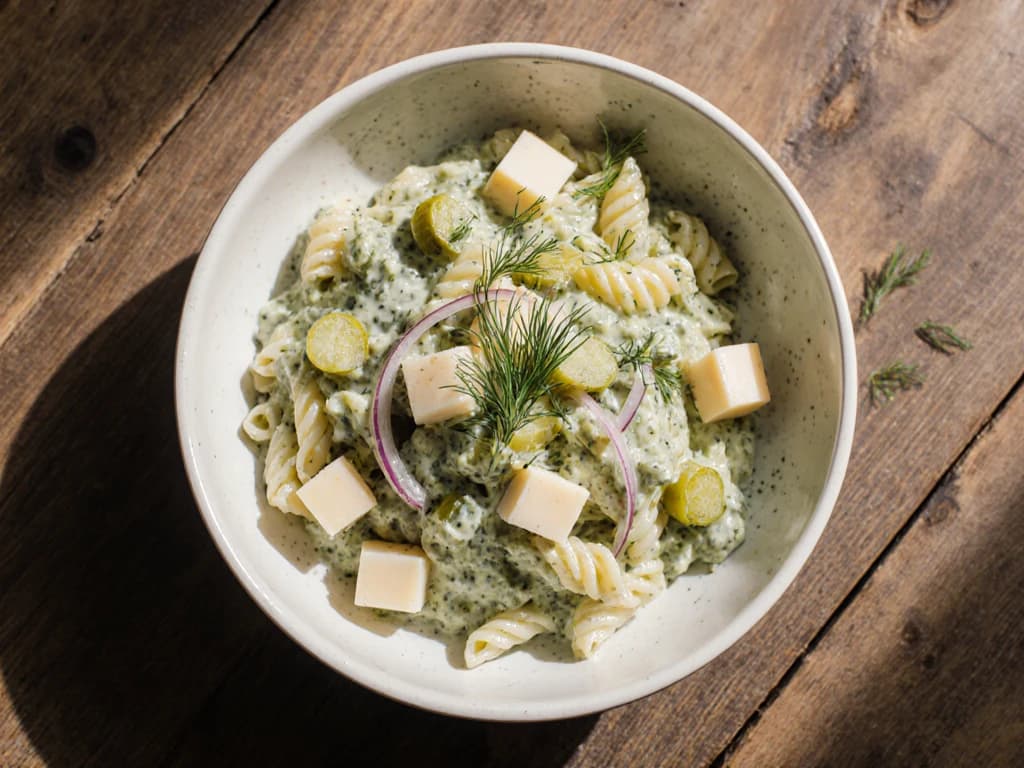
Dill pickle pasta salad delivers bold briny flavour through three distinct pickle applications: brine soaked into warm pasta, chopped pickles folded into the salad, and more brine whisked into the creamy dill dressing. Each vector contributes a different sensory element that a single application cannot replicate. Ready in 25 minutes and better after a 2-hour chill, it is the most talked-about dish at any potluck table.
- 1
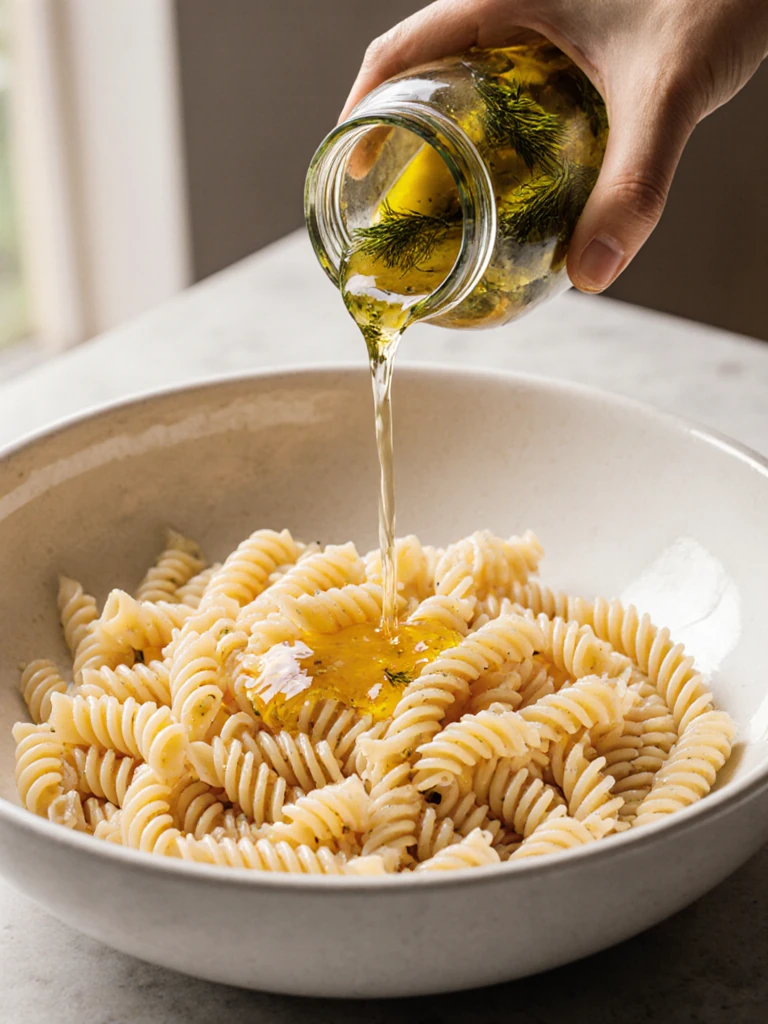
Soaking warm pasta in pickle brine immediately after draining allows acetic acid to penetrate the starch matrix before it cools and closes, building tangy flavour into the pasta core that cold-tossed brine cannot achieve.
- 2
Delivering pickle flavour through three applications (warm-pasta soak, chopped pickles, and brine in the dressing) produces a layered, full-spectrum result where each vector contributes a distinct texture and intensity.
- 3
A 2:1 mayonnaise-to-sour-cream ratio provides enough fat to coat every pasta spiral while the brine and Dijon mustard prevent the dressing from tasting heavy after chilling, keeping the salad bright and sharp.
Dill pickle pasta salad is the rare cold pasta salad with a flavour identity strong enough to anchor a whole meal. Pickle brine soaked into warm rotini before the dressing is applied gives every spiral a tangy, seasoned core that no amount of dressing added later can replicate. Chopped dill pickles bring crunch and a second hit of acidity, while a creamy mayonnaise-and-sour-cream dressing spiked with yet more brine, Dijon mustard, garlic powder, and fresh dill rounds the bowl into something simultaneously sharp and rich. Sharp cheddar cubes provide pockets of creamy, salty fat that balance the acid. A 2-hour chill is the minimum for the flavours to fully integrate.
The Triple Pickle Delivery System
Delivering dill pickle flavour through three separate applications — a warm-pasta brine soak, chopped pickles for texture, and brine in the dressing — produces a layered, full-spectrum pickle flavour that single-source recipes cannot match.
Each application contributes something distinct. The warm-pasta brine soak works because acetic acid (the active compound in pickle brine) penetrates the starch matrix of hot pasta within the first 5 minutes of contact, before the starch cools and tightens. Once the pasta is cold, this window closes: brine added to cold pasta sits on the surface and slides off with the first toss. The chopped pickles add textural contrast and a burst of intense brine at the moment of biting, a sensation the dressing cannot create. The brine in the dressing carries the pickle flavour uniformly across every surface, tying the other two elements together. Removing any one of the three elements produces a noticeably flatter result. Use the brine straight from the pickle jar at room temperature, not chilled, to maximise the soaking effect on warm pasta.
Building the Creamy Dill Dressing
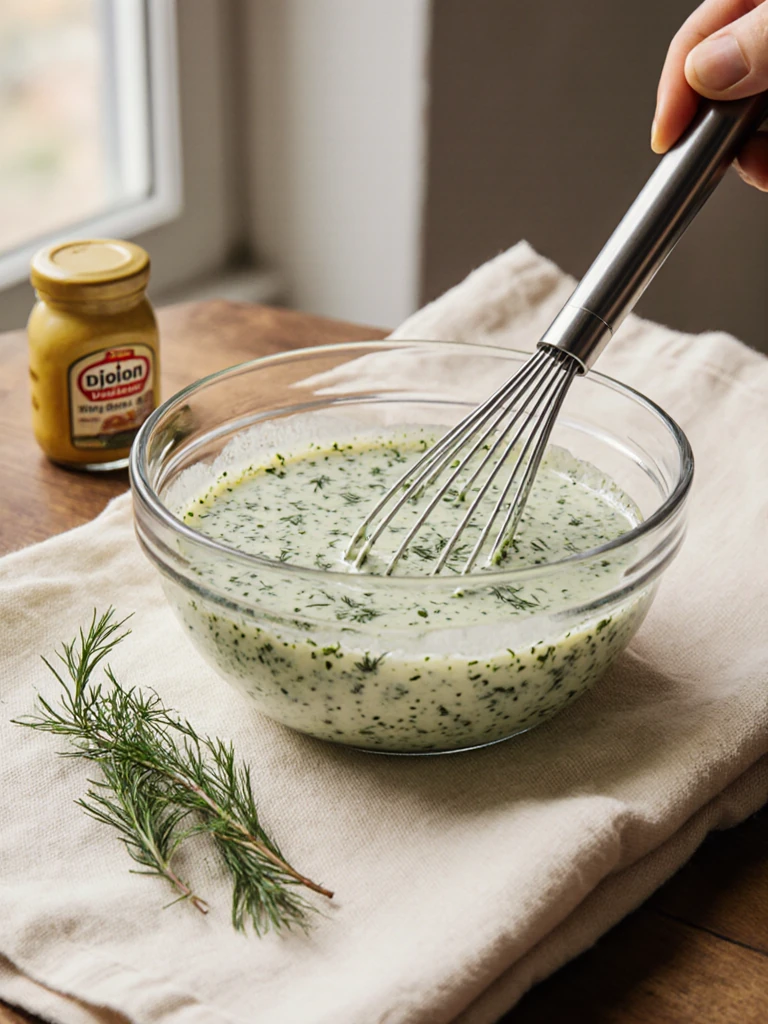
Combining mayonnaise and sour cream in a 2:1 ratio with pickle brine, Dijon mustard, fresh dill, and garlic powder creates a dressing with enough fat to coat 350g of pasta while the brine and mustard keep the flavour from tasting heavy.
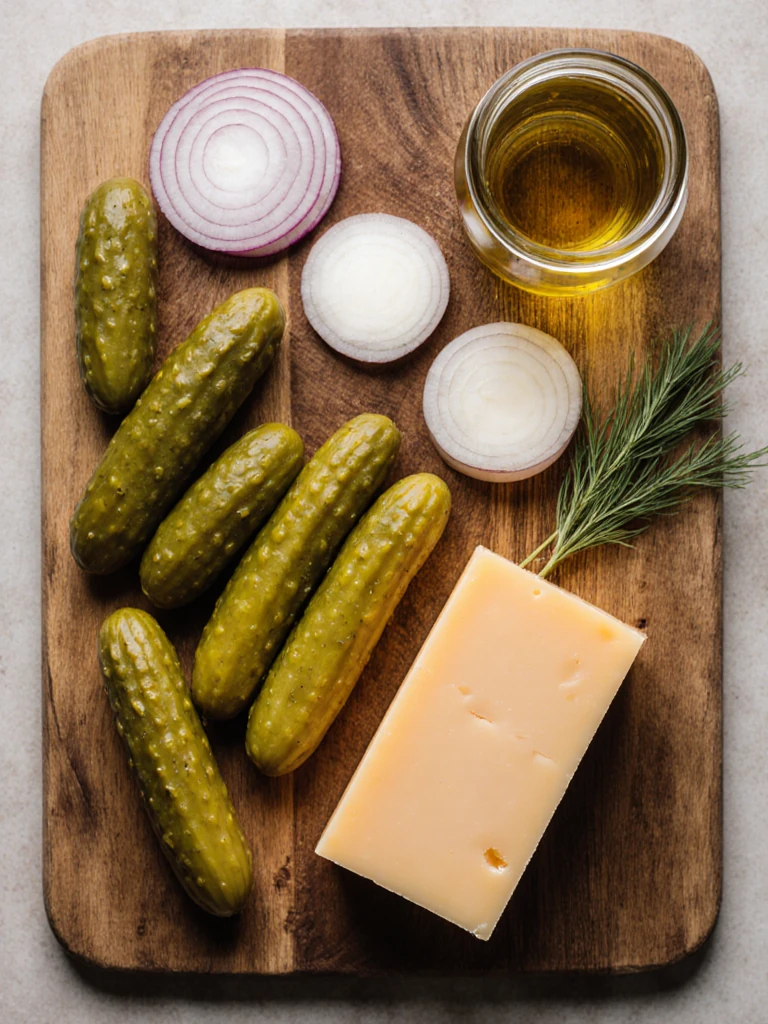
Whisk the dressing in the same bowl used for the brine soak to capture any brine that the pasta did not fully absorb. Start with 4 tablespoons of mayonnaise, 2 tablespoons of sour cream, 3 tablespoons of pickle brine, 1 teaspoon of Dijon mustard, half a teaspoon of garlic powder, a quarter teaspoon of onion powder, and 2 tablespoons of finely chopped fresh dill. The finished dressing should taste noticeably over-seasoned before it touches the pasta: salt, garlic, and acid will all mute during the 2-hour chill as the pasta continues to absorb the dressing. Stir in a pinch of black pepper and taste. If the pickle flavour seems muted, add one more tablespoon of brine rather than more dill, since fresh dill loses intensity quickly in an acidic dressing.
Assembling and Chilling the Salad
Adding the sharp cheddar and white onion after the dressing is applied rather than before prevents the onion's sulfur compounds from transferring into the dressing during the 2-hour chill and sharpening to an unpleasant degree.
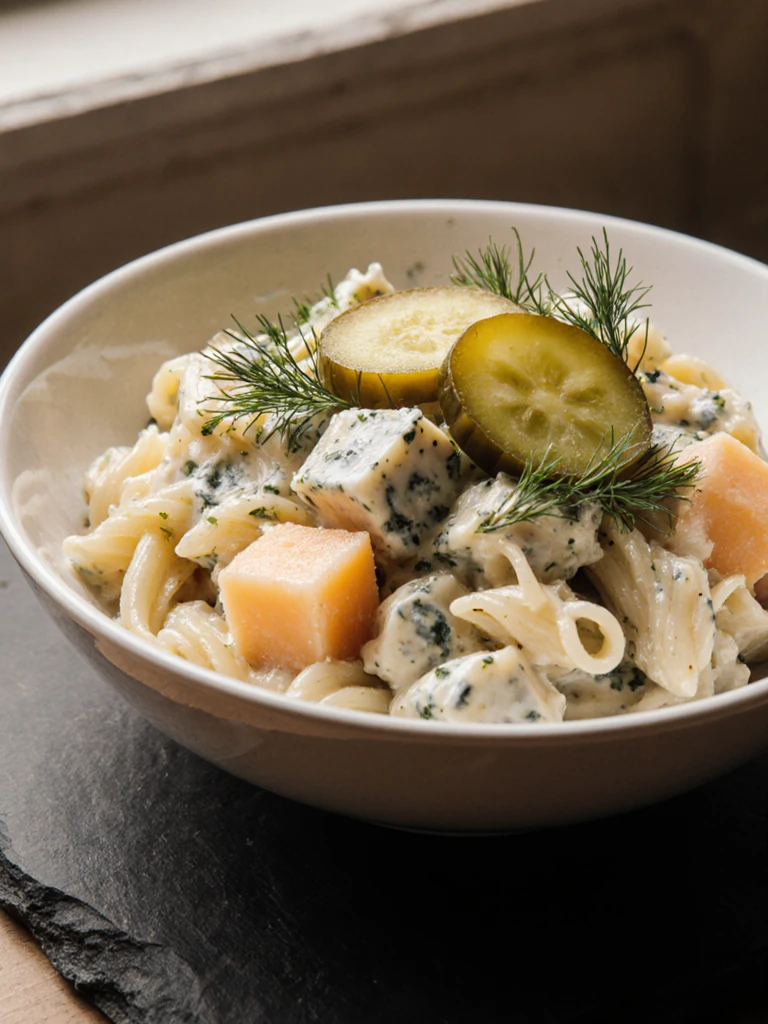
After the brine soak, allow the pasta to cool completely on a tray, around 10 minutes at room temperature. Pour three-quarters of the dressing over the cooled pasta and fold through gently. Add the chopped dill pickles, diced cheddar, and thinly sliced white onion and fold once more until evenly distributed. Cover and refrigerate for a minimum of 2 hours, or overnight for best results. Before serving, pour the remaining dressing over the salad and toss to redistribute. Taste for salt, adding a splash more brine if needed for brightness, then garnish with fresh dill fronds and a few pickle rounds.
Serving Dill Pickle Pasta Salad
Serve cold or at cool room temperature, within 2 hours of removing from the refrigerator, alongside burgers, grilled brats, fried chicken, or hot dogs where the sharp pickle acidity cuts through fatty grilled proteins.
The salad's acidity makes it a natural pairing for rich, fatty mains where a lighter vinaigrette-dressed salad would be lost. For a crowd of 12, double the recipe and use two separate bowls for the brine soak and dressing steps: combining double quantities in a single bowl makes even tossing difficult. Leftovers are excellent the next day once the pasta has fully absorbed the dressing. Browse more potluck-ready ideas in Recipe Dairy's salad collection.
The Recipe
Dill Pickle Pasta Salad
Ingredients
For the creamy dill dressing
For the salad
Instructions
- 1
Bring a large pot of water to a boil, add 1 tbsp kosher salt, and cook rotini for the full package time until completely tender.
- 2
Drain the pasta and immediately return it to the empty pot, then pour the 3 tbsp of pickle brine over the warm pasta and toss to coat.
- 3
Spread the brine-soaked pasta across a large tray and cool at room temperature for 10 minutes.
- 4
Whisk together the mayonnaise, sour cream, 3 tbsp pickle brine, Dijon mustard, garlic powder, onion powder, chopped fresh dill, and black pepper in a large bowl until smooth.
- 5
Transfer the cooled pasta to the dressing bowl and pour three-quarters of the dressing over it, then fold gently to coat.
- 6
Add the chopped dill pickles, cheddar cubes, and sliced white onion and fold through until evenly distributed.
- 7
Cover and refrigerate for at least 2 hours, or overnight.
- 8
Before serving, add the remaining dressing and toss, taste for salt and brine, then garnish with fresh dill fronds and pickle rounds.
Nutrition Facts
Per serving
390 Calories
Moderate energy per serving
Macronutrients
* % Daily Value based on a 2,000 calorie diet
Tips & Notes
Use refrigerated dill pickles (found in the deli or produce section) rather than shelf-stable varieties. Refrigerated pickles are crisper and have a fresher, less vinegary flavour that holds up better after 2 hours in the dressing. Measure the brine at room temperature, not cold from the fridge. Cold brine is thicker and less fluid, and will not coat the warm pasta as evenly during the soak step. Make-ahead: The salad improves overnight. Assemble with three-quarters of the dressing, cover, and refrigerate. Add the remaining dressing and taste for salt just before serving. Sodium note: Pickle brine and cheddar are both high in sodium. Taste the finished dressing before adding any additional salt, as the combination of brine, cheese, and pasta may be seasoned enough without it.
Frequently Asked Questions
Three pickle applications: brine soaked into warm pasta, chopped pickles for texture, and more brine in the creamy dressing. Each contributes a distinct layer of flavour and texture that a single application cannot replicate.
Enjoyed this recipe?


