Smoked Brisket Loaded Baked Potato
Smoked Brisket Loaded Baked Potato
A smoked brisket loaded baked potato turns one pound of leftover BBQ and four russet potatoes into a meal that holds its own against any restaurant version. The potato bakes to 210°F for a fluffy, steam-dry interior; the brisket warms in beef broth to stay juicy; and a double-cheese layer locks every topping in place. Ready from oven to table in 75 minutes.

- 1
Baking russet potatoes directly on the oven rack at 425°F circulates hot air on all sides, producing a papery-crisp skin and a fluffy interior at the 205–212°F internal temperature target where starch gelatinization is fully complete.
- 2
Warming chopped brisket in a covered skillet with beef broth at medium-low heat brings the meat to 140–150°F, the temperature at which fat-soluble smoke compounds return to a liquid state and the meat stays moist rather than tightening.
- 3
Placing the first cheese layer directly onto the hot potato flesh before the brisket melts it into the starch surface, anchoring every subsequent topping so the loaded potato holds together through cutting and eating.
Smoked brisket loaded baked potatoes solve the leftover problem with a result worth planning around. A russet potato baked to an internal temperature of 210°F delivers a dry, fluffy interior that holds toppings without going soggy. Chopped brisket warmed in a splash of beef broth stays moist and smoke-forward rather than dry and reheated-tasting. The layering order — cheese, brisket, cheese — creates a molten binding layer that holds through the last bite. Total active time is under 15 minutes.
Choosing and Baking the Right Potato
Russet potatoes are the correct choice for smoked brisket loaded baked potatoes. A russet's high starch content and low moisture produce a light, fluffy interior when baked, while a waxy potato like Yukon Gold retains moisture and turns dense under a heavy topping load.
Select potatoes in the 10–12 oz range, roughly the size of a large fist. Potatoes smaller than 8 oz split too easily when pressed open; potatoes larger than 14 oz require 75 or more minutes to bake through and risk over-crisping the skin before the center finishes. Scrub the skin under cold running water and pat fully dry before oiling. Oil applied to a damp skin steams rather than crisps, producing a leathery rather than shatteringly crisp exterior.
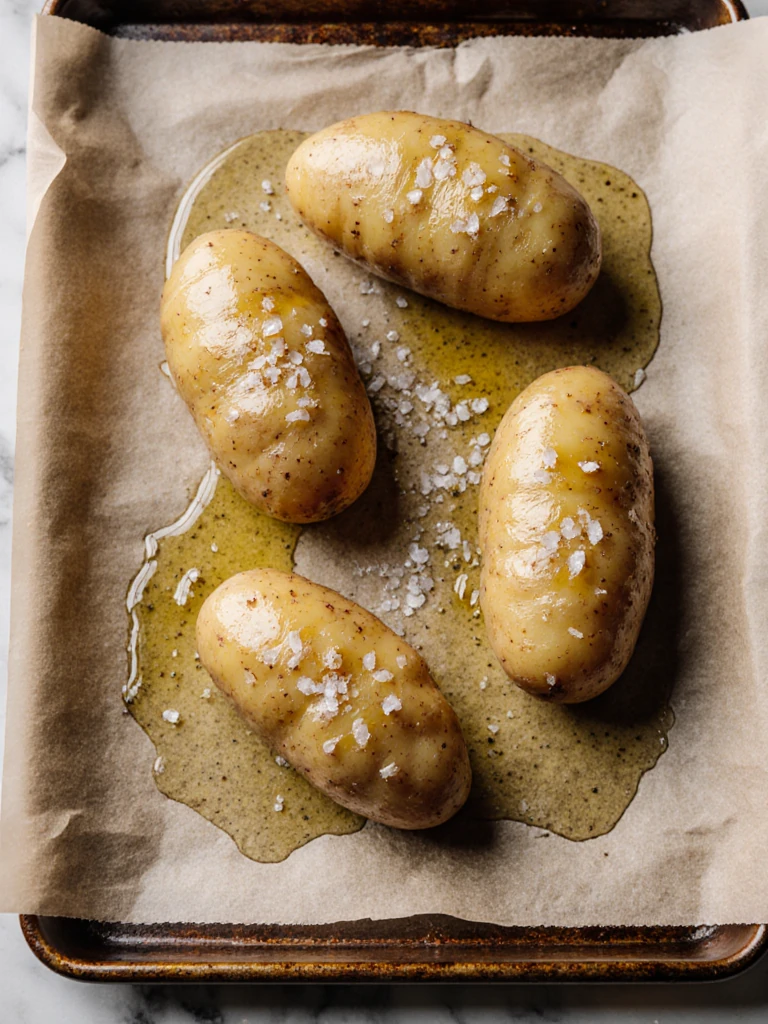
Coat each potato evenly in olive oil, then roll in kosher salt until every surface is covered. The salt draws moisture from the outer starch cells during baking, which is the mechanism that creates the papery-crisp skin texture. Poke each potato 8 to 10 times with a fork to open steam vents. Skipping this step causes internal pressure to build; a sealed potato can rupture in the oven, and the rapid steam release collapses the starch structure near the puncture, leaving gummy patches inside.
Bake directly on the oven rack at 425°F. A baking sheet insulates the underside and produces a softer base. The rack allows hot air to circulate on all sides simultaneously, which reduces total cook time by 10 to 15 minutes compared to the sheet method. Pull the potatoes when a probe thermometer reads 205–212°F at the center. Below 200°F, the starch granules are not fully gelatinized and the flesh feels gluey. Above 215°F, the cell walls begin to break down and the potato turns watery.
How to Warm Brisket Without Drying It Out
Warm chopped brisket in a skillet over medium-low heat with 2 tablespoons of beef broth per cup of meat. The broth replaces moisture lost during refrigeration and keeps the brisket at serving temperature without pushing internal heat high enough to tighten the muscle fibers.
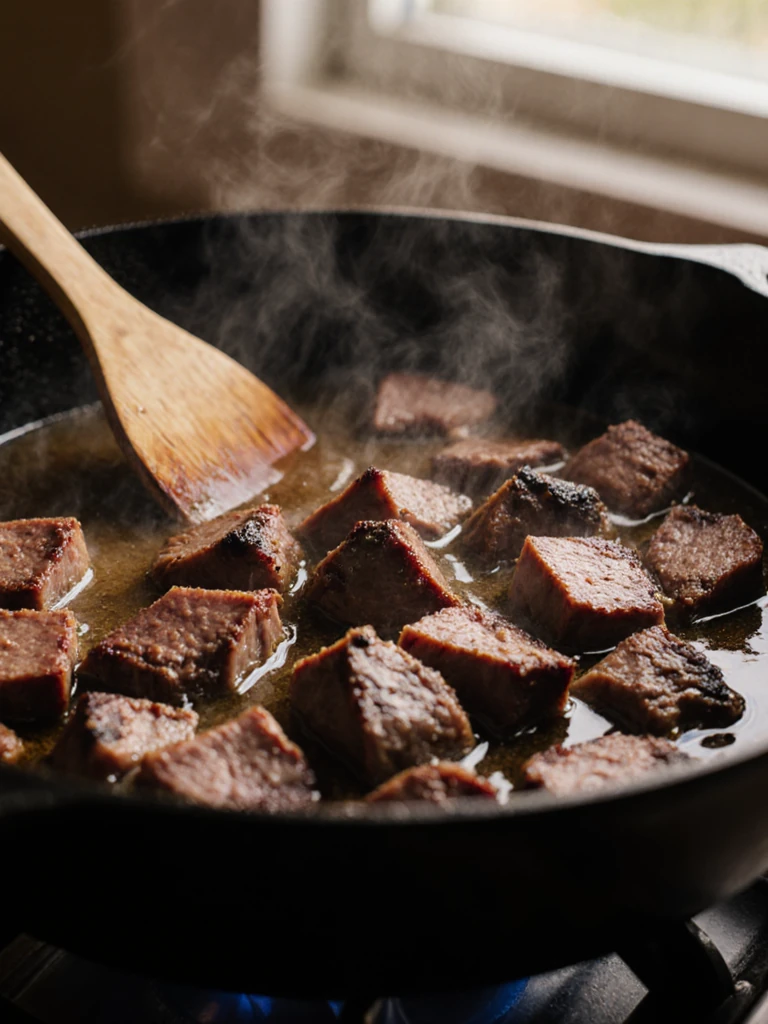
Cold brisket straight from the refrigerator loses its smoke aroma within the first few bites because fat-soluble smoke compounds solidify below 50°F. Warming the meat to 140–150°F restores aroma and returns the fat to a semi-liquid state that coats the palate. A microwave accomplishes this in 45 seconds, but the rapid, uneven heat causes the outer pieces to reach 180°F while the center remains cold. The overheated pieces shed their remaining moisture and turn fibrous. A covered skillet over medium-low heat reaches the 140–150°F window in 4 to 5 minutes and maintains it without overshooting.
Use brisket that has been chopped rather than shredded for this application. Shredded brisket distributes across the potato surface but loses structural presence under toppings. Chopped pieces of roughly half an inch hold their form when cheese is piled on top, so each forkful contains identifiable, bark-edged brisket rather than a uniform paste. For a comparison of how brisket texture choices affect a different format, the same principle applies to smoked brisket tacos, where chopped pieces perform better in a folded shell than shredded meat does.
The Correct Order for Building a Loaded Baked Potato
Layer cheese directly onto the hot potato flesh first, before the brisket. The residual heat from the potato melts the bottom cheese layer into the starch, anchoring all subsequent toppings so they stay in place when the potato is cut or pressed open.
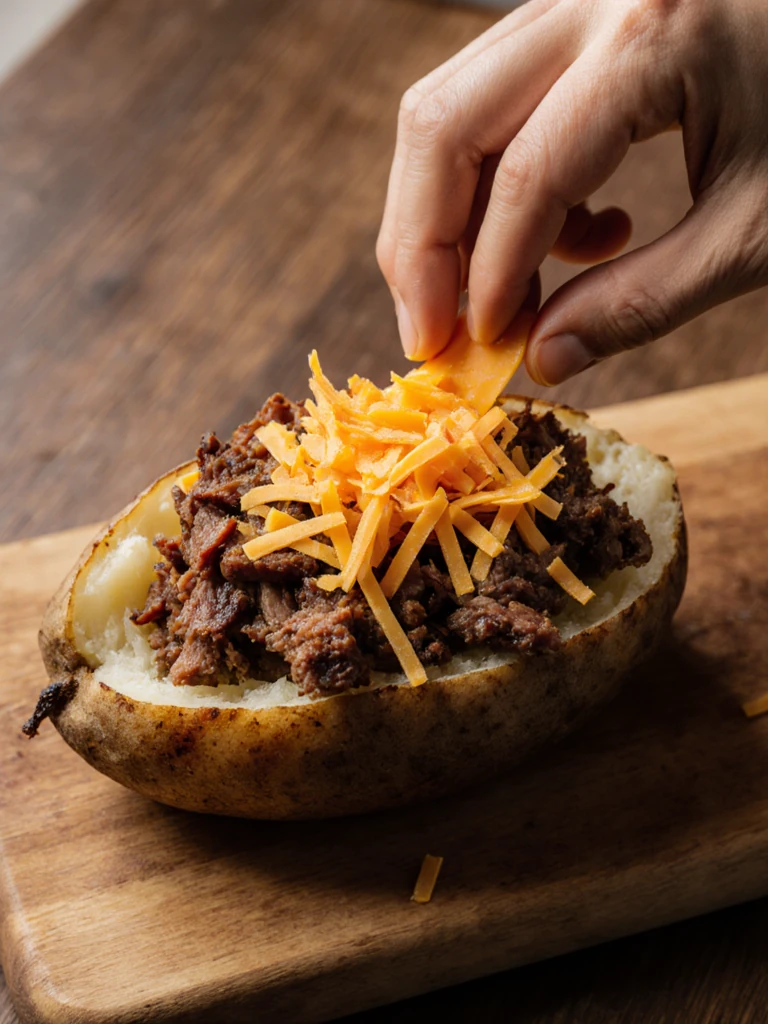
The assembly sequence that competitors miss: split the potato, press the ends toward the center to open the cavity, fluff the interior with a fork, add butter and let it melt fully into the flesh, then add the first layer of shredded cheddar. The cheese layer below the brisket melts against the hot starch and creates a binding surface. Without it, the brisket sits on dry potato and slides toward the plate edge with the first forkful.
Add the warmed brisket over the melted cheese layer. Top the brisket with a second layer of cheddar. The upper cheese layer melts around the brisket pieces and creates a cohesive cap that holds the meat in place. Add the sour cream last, not before the cheese. Sour cream placed under the cheese acts as a moisture barrier and prevents the upper cheese from melting fully. Placed on top, it contrasts the warm, rich layers with a cool, acidic finish. Finish with green onions and pickled jalapeños. Like the smoked brisket nachos approach, the cold toppings always go on last — heat wilts them and removes the textural contrast they're there to provide.
Topping Combinations That Work With Smoked Brisket
Smoked brisket carries oak, post oak, or hickory smoke notes depending on the wood used. Toppings with acidity or brightness cut through that smokiness; toppings with additional fat amplify it. Match the topping set to the smoke level of the brisket being used.
For lightly smoked brisket, a classic loaded set works: butter, sharp cheddar, sour cream, green onions, and crispy bacon. For heavily smoked brisket, acidity is needed to balance the bark's intensity: pickled jalapeños, pickled red onions, pico de gallo, or a few dashes of hot sauce provide the acid counterpoint. A BBQ sauce drizzle adds sweetness that rounds out both profiles, but use a thinner sauce rather than a thick, sweet glaze. Thick sauces pool in the cavity and make the base of the potato waterlogged within minutes.
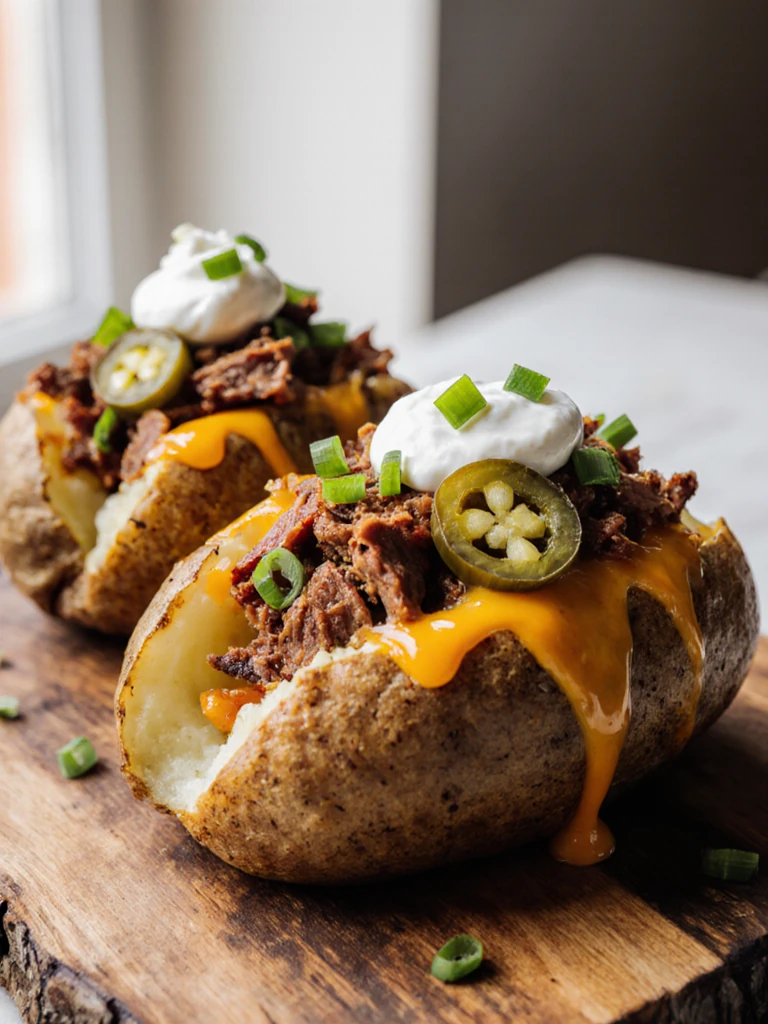
Build these smoked brisket loaded baked potatoes for your next BBQ leftover night. Find the full recipe at Recipe Diaries.
The Recipe
Smoked Brisket Loaded Baked Potato
Ingredients
For the potatoes
For the brisket
For the toppings
Instructions
- 1
Preheat oven to 425°F. Make sure an oven rack is positioned in the center with clear space below for airflow.
- 2
Coat each dried russet potato in olive oil until fully covered with no dry patches. Roll in kosher salt until the entire surface is seasoned. Poke each potato 8 to 10 times with a fork, spacing the holes evenly around the circumference.
- 3
Place potatoes directly on the oven rack. Bake for 55 to 65 minutes until a probe thermometer inserted into the center reads 205–212°F and the skin feels papery and crisp.
- 4
When the potatoes have 10 minutes remaining, warm the chopped brisket in a skillet over medium-low heat. Add beef broth, stir to coat, and cover with a lid. Heat for 4 to 5 minutes, stirring once, until the brisket reaches 140–150°F. Remove from heat.
- 5
Remove potatoes from the oven. Cut a slit lengthwise across the top of each potato, stopping ½ inch from each end. Use a towel to grip the ends and press them firmly toward the center to open the cavity wide. Fluff the interior flesh with a fork.
- 6
Place 1 tablespoon of butter into each potato and allow it to melt fully into the flesh, about 30 seconds.
- 7
Add ¼ cup shredded cheddar directly onto the hot buttered flesh. Allow it to begin melting, about 20 seconds.
- 8
Divide the warmed brisket evenly among the four potatoes, piling it into the cheese-lined cavity.
- 9
Top each potato with another ¼ cup shredded cheddar over the brisket. The residual heat will melt it within 60 seconds.
- 10
Add a dollop of sour cream, scatter green onions and pickled jalapeños, and drizzle with BBQ sauce if using. Season with black pepper and serve immediately.
Nutrition Facts
Per serving
710 Calories
Hearty & filling per serving
Macronutrients
* % Daily Value based on a 2,000 calorie diet
Tips & Notes
Season the potato skin generously — more salt than feels comfortable. Much of it falls away during baking and only a thin, well-seasoned crust remains. Under-salted skin tastes flat against the rich brisket topping. Test doneness with a probe thermometer, not just a fork. A fork can pierce through at 190°F, which feels done but leaves the center starch under-gelatinized and gluey. Pull at 205–212°F for the correct texture. For make-ahead prep, bake the potatoes up to 2 hours in advance. Wrap in foil and hold in a 200°F oven to keep warm. Chop and store the brisket separately in the refrigerator and warm it to order. Never top the potatoes before serving — assembled loaded potatoes go soggy within 20 minutes as steam from the flesh migrates into the toppings. If beef broth is unavailable for warming the brisket, use the reserved drippings from the original brisket cook. The drippings are richer and will deepen the smoke flavor further. Two tablespoons per pound of meat is sufficient.
Frequently Asked Questions
Bake the potatoes and prep the brisket up to 2 hours ahead. Hold potatoes wrapped in foil in a 200°F oven and warm the brisket to order. Never assemble ahead — toppings make the skin soggy within 20 minutes.
Enjoyed this recipe?


