Chunky Minestrone Soup
Chunky Minestrone Soup
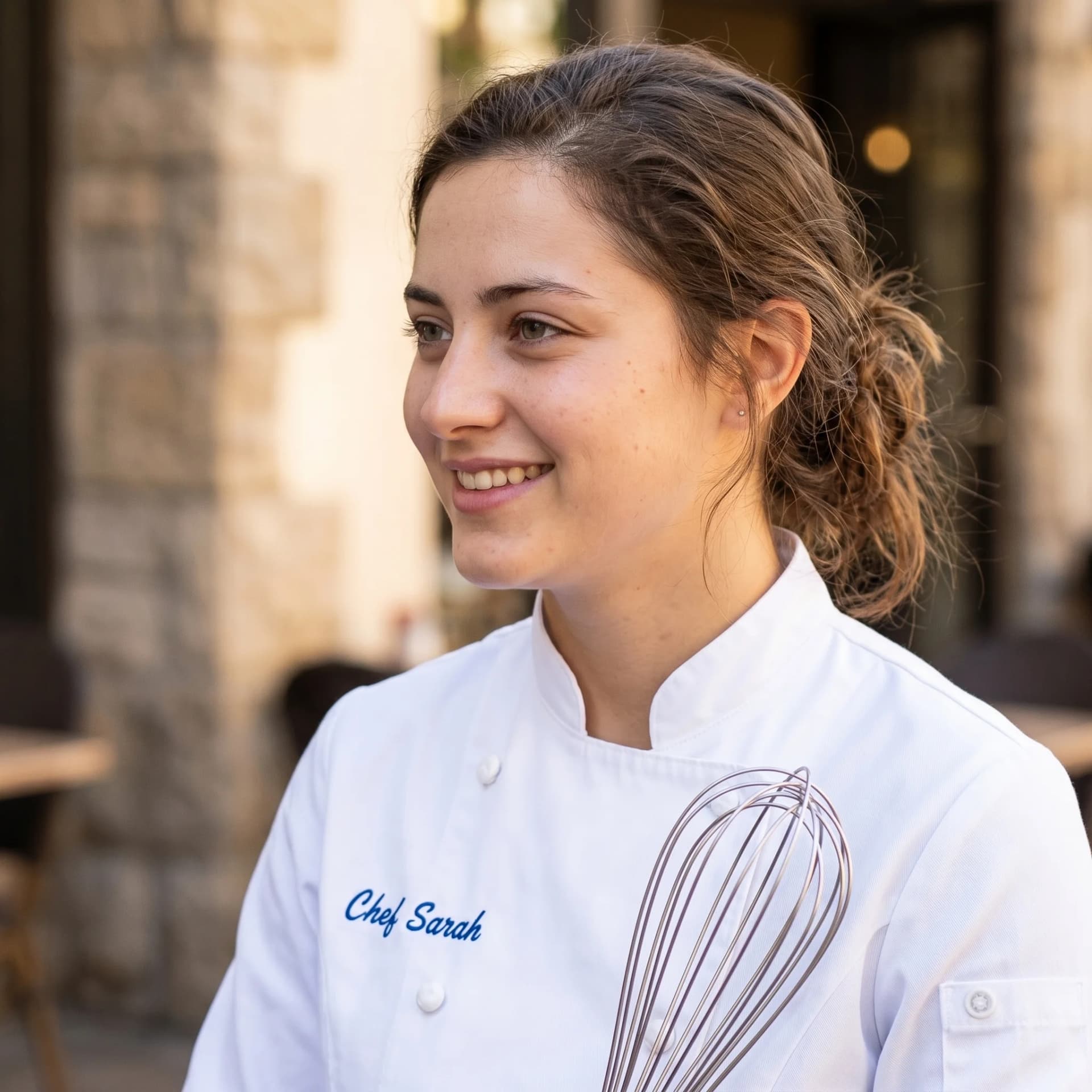
Chunky minestrone soup built on a properly made soffritto, a Parmesan rind simmered into the broth for glutamate depth, and pasta kept entirely separate so leftovers taste as good as day one. Large vegetable pieces added in sequence by density keep every component at the right texture when the bowl hits the table.
- 1
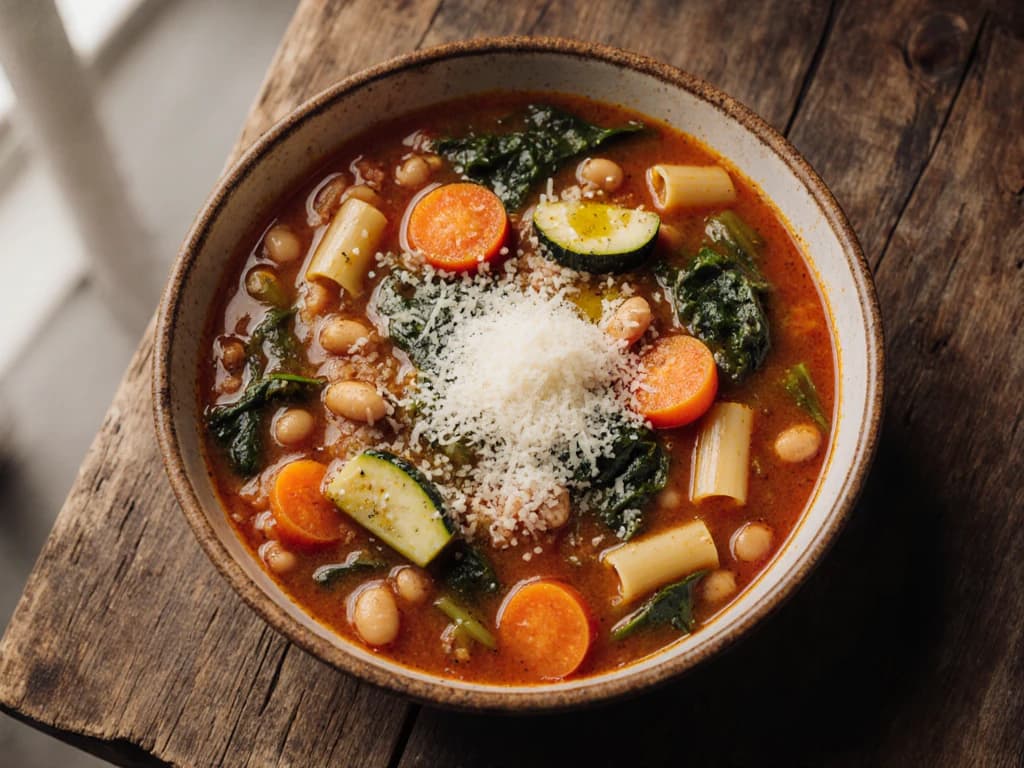
Eight minutes of soffritto sautéing in olive oil before any liquid is added converts the raw alliums and root vegetables into a sweet, caramelized flavor base through Maillard browning and moisture evaporation — a depth that cannot be built retroactively by seasoning alone.
- 2
A Parmesan rind simmered in the broth releases glutamates and gelatin over 20 to 30 minutes, producing a savory umami depth and faint silkiness that vegetable stock alone cannot achieve.
- 3
Cooking pasta separately and adding it per bowl at serving prevents the pasta from absorbing broth during storage, keeping the soup brothy and chunky through five days of leftovers.
Chunky minestrone soup is one of those dishes where three technique decisions separate a deeply satisfying bowl from a watery, blown-out vegetable broth. The soffritto — onion, carrot, and celery sautéed in olive oil for 8 full minutes before any liquid goes in — builds a sweet, caramelized flavor base that no amount of added seasoning can replicate after the fact. A Parmesan rind simmered in the broth releases glutamates and gelatin that add savory depth and a faint silkiness no stock alone provides. And the pasta cooks separately and gets added per bowl at serving — the single most impactful storage decision, because pasta left in the pot overnight absorbs all the broth and turns the leftovers into a starchy paste. Get those three steps right and this chunky minestrone soup delivers on its name: large, distinct vegetable pieces in a rich, deeply savory broth with genuine body.
Building the Soffritto: The Flavor Foundation of Chunky Minestrone
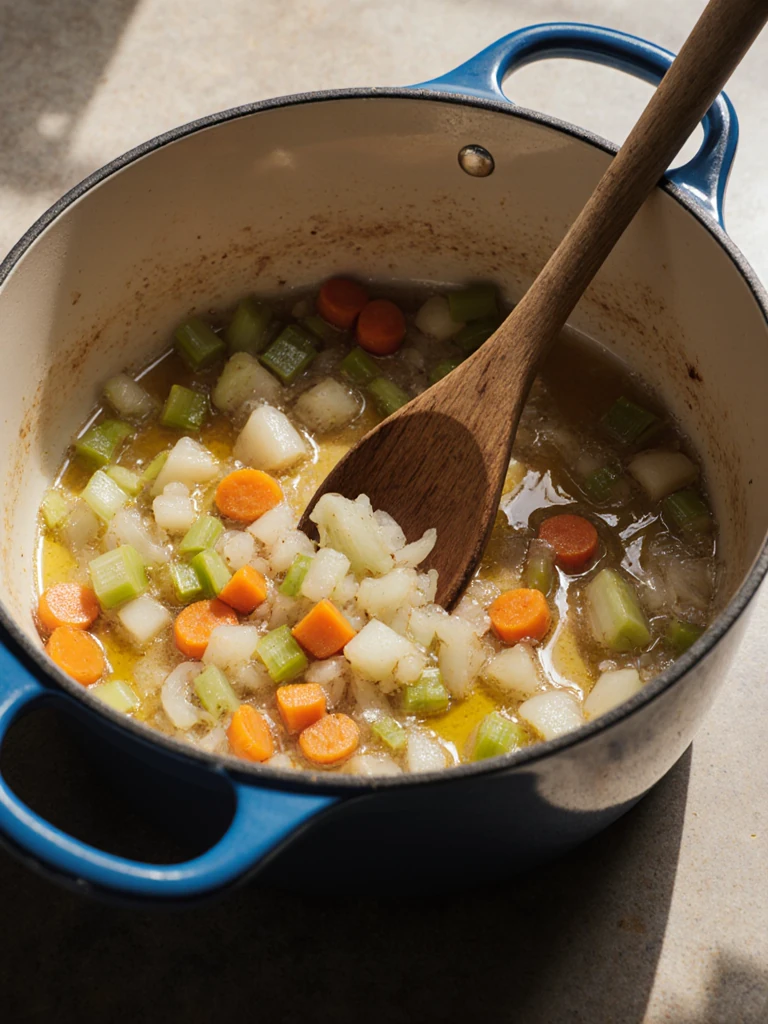
Sauté diced onion, carrot, and celery in 3 tablespoons of olive oil over medium heat for 8 full minutes before adding any liquid or other vegetables. The soffritto — Italian for "under-fried" — transforms raw alliums and root vegetables into a sweet, concentrated flavor base through gentle Maillard browning and moisture evaporation. Vegetables added directly to broth without this step taste raw and separate rather than integrated.
Cut the onion, carrot, and celery into a consistent half-inch dice for the soffritto. The soffritto vegetables will largely dissolve into the background of the finished soup; their purpose is flavor contribution, not texture. A finer dice (quarter-inch) cooks faster and browns more easily — acceptable here because these pieces are not meant to stay chunky. Add the garlic in the last 60 seconds of the soffritto, once the onion has turned translucent and the carrot has begun to soften. Garlic added at the start burns at the edges before the other vegetables are ready and contributes a bitter note to the base.
Add 2 tablespoons of tomato paste directly to the soffritto and cook for 90 seconds, stirring constantly, until the paste darkens from bright red to a deep brick color. The same color-change principle that applies in the smoked brisket shepherd's pie gravy applies here: 90 seconds of direct heat converts the tomato paste's raw acidity into a rounded, concentrated umami depth that forms the savory backbone of the entire soup.
The Parmesan Rind: Why It Belongs in Every Pot of Minestrone
Add a 3-inch Parmesan rind to the pot with the broth. The rind is made from the same aged cheese as the grated topping, and its dense protein matrix releases glutamates — the amino acid responsible for umami — slowly into the simmering liquid over 20 to 30 minutes. The collagen in the rind's protein structure dissolves into gelatin, which gives the broth a faint silkiness and a more substantial mouthfeel than a purely vegetable-based liquid.
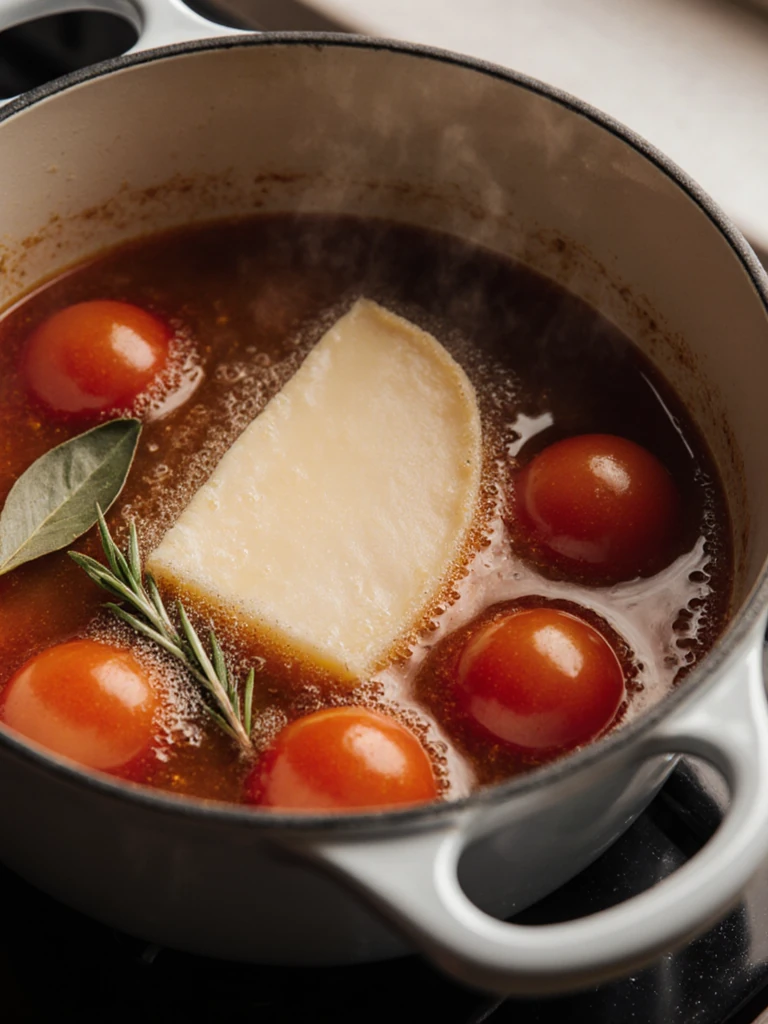
Save Parmesan rinds in a zip-lock bag in the freezer after finishing each block of cheese. A frozen rind works identically to a fresh one — add it directly to the pot without thawing. One 3-inch piece is sufficient for 6 to 8 cups of liquid. Remove and discard the rind before serving; it will be soft and bloated after simmering but should not be eaten.
The Parmesan rind also adds a faint salt load to the broth — account for this by seasoning the soup only after the rind has simmered for at least 20 minutes. Seasoning before the rind has contributed its salt frequently results in an over-salted finished soup.
Vegetable Cut Size: How to Keep Minestrone Actually Chunky
Cut all main vegetables — zucchini, potato, green beans, and canned tomatoes — into pieces no smaller than three-quarters of an inch. Pieces smaller than half an inch break down and disintegrate during the 20-minute simmer, turning the soup's texture from chunky to mushy. The three-quarter-inch to one-inch range provides enough mass to retain structure through the full cook while still fitting comfortably on a spoon.
The vegetable addition sequence matters as much as cut size. Dense vegetables (potato, carrot) go in with the broth at the start. Medium-density vegetables (zucchini, green beans) go in at the halfway point, after 10 minutes of simmering. Delicate vegetables (spinach, fresh basil) go in off heat, wilting from residual warmth rather than cooking through. Adding all vegetables simultaneously at the start produces a pot where the spinach is grey and collapsed while the potato is barely tender, because each vegetable has a different structure and cooking time. The sequential approach produces a soup where every component arrives at serving temperature in the correct textural state.
Partially Mashing Cannellini Beans for Natural Body
Remove one-third of the drained cannellini beans before adding them to the soup and mash them roughly with a fork until they form a coarse paste with some whole pieces remaining. Stir the mashed portion into the broth and add the remaining whole beans intact. The mashed beans dissolve into the liquid, releasing starch and protein that thicken the broth naturally — producing a velvety, substantial body without added flour, cornstarch, or cream.
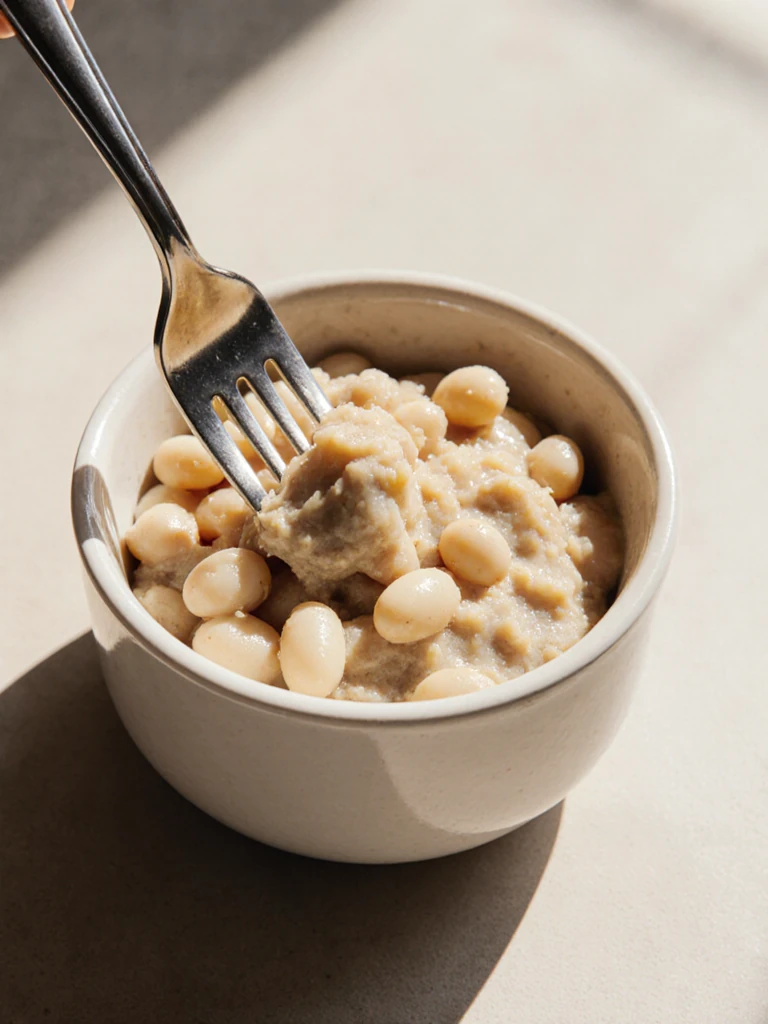
This technique comes from traditional Italian bean soups and produces a fundamentally different mouthfeel than a soup where all beans remain whole. Whole beans contribute texture and protein but do not thicken the surrounding liquid. Partially mashed beans do both — the intact portion maintains the chunky character while the mashed portion gives the broth a body that holds up even when the soup is reheated the next day. A full can (15 oz drained) of cannellini beans per pot provides the right ratio: roughly one-third mashed (about half a cup) and two-thirds whole.
The Pasta Problem: Why It Should Never Cook in the Soup Pot
Cook the pasta separately in heavily salted boiling water to 1 minute short of al dente, drain, and add directly to individual bowls at serving time. Pasta cooked in the soup pot absorbs broth continuously — during the cook, during storage, and during reheating — swelling to three times its dry volume and converting what was a brothy, chunky soup into a thick starchy paste within hours of cooking.
Short pasta shapes work best in minestrone: ditalini, small shells (conchigliette), or elbow macaroni. These shapes hold their form at a 1-inch-and-under length and fit onto a spoon with beans and vegetable pieces without requiring cutting. Long pasta shapes like spaghetti or linguine tangle around themselves and the chunky vegetables, creating a mess when ladled. Cook the pasta 1 minute short of al dente because the hot soup ladled over it in the bowl will continue cooking the pasta for 60 to 90 seconds after serving.
For meal prep, store the soup base and cooked pasta in separate airtight containers. The soup base keeps for 5 days in the refrigerator and 3 months in the freezer. The cooked, undressed pasta keeps for 3 days tossed with a thin film of olive oil to prevent sticking. Reheat the soup base and add the pasta per bowl at serving — every portion tastes as good as the first.
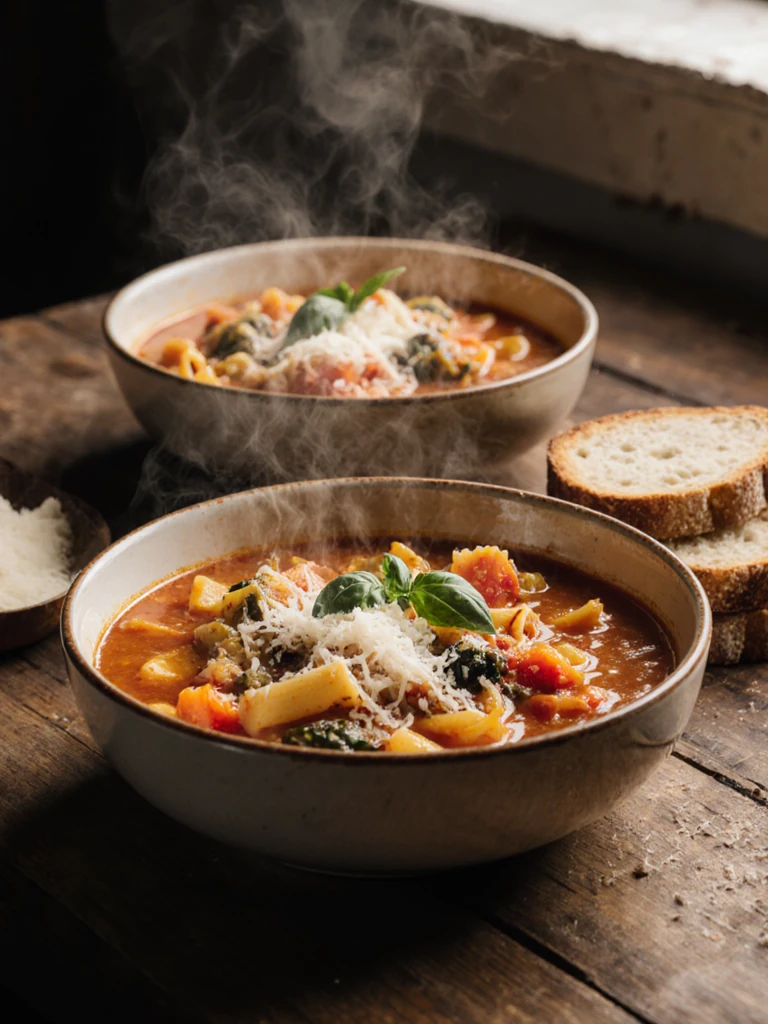
Serve chunky minestrone soup immediately with crusty bread and extra Parmesan at the table. Find the full recipe at Recipe Diaries.
The Recipe
Chunky Minestrone Soup
Ingredients
For the soffritto
For the soup
For the pasta (cooked separately)
For serving
Instructions
- 1
Prepare the beans: Remove one-third of the drained cannellini beans (about ¾ cup) into a small bowl and mash roughly with a fork until a coarse paste with some whole pieces forms. Set both the mashed and whole beans aside separately.
- 2
Build the soffritto: Heat olive oil in a large Dutch oven or heavy pot over medium heat. Add the diced onion, carrot, and celery. Cook, stirring occasionally, for 8 minutes until the onion is translucent and the carrot has begun to soften.
- 3
Add the minced garlic and cook for 60 seconds until fragrant. Add the tomato paste and stir constantly for 90 seconds until it darkens from bright red to deep brick.
- 4
Add the hand-crushed tomatoes and their juices, vegetable broth, Parmesan rind, bay leaves, oregano, thyme, and red pepper flakes. Stir to combine.
- 5
Add the cubed potatoes. Bring to a boil over high heat, then reduce to a steady simmer.
- 6
Stir in the mashed cannellini beans and simmer uncovered for 10 minutes.
- 7
Add the zucchini and green beans. Continue simmering for 10 to 12 minutes until the potatoes are fully tender when pierced with a fork and the zucchini holds its shape but is cooked through.
- 8
Meanwhile, cook the pasta in a separate pot of heavily salted boiling water for 1 minute less than the package's al dente time. Drain and toss with a thin film of olive oil to prevent sticking. Set aside.
- 9
Add the whole cannellini beans to the soup and stir to combine. Remove the bay leaves and Parmesan rind. Add the baby spinach off heat and stir until just wilted, about 60 seconds. Taste and season with salt and black pepper.
- 10
To serve: add a portion of cooked pasta to each bowl, ladle the hot soup over the top, and finish with freshly grated Parmigiano-Reggiano, torn basil, and a drizzle of olive oil.
Nutrition Facts
Per serving
340 Calories
Moderate energy per serving
Macronutrients
* % Daily Value based on a 2,000 calorie diet
Tips & Notes
Season the soup only after the Parmesan rind has simmered for at least 20 minutes. The rind releases salt into the broth gradually, and seasoning before it has fully contributed its load frequently results in an over-salted finished pot. Save Parmesan rinds in a zip-lock bag in the freezer whenever a block of Parmesan is finished. Frozen rinds work identically to fresh and keep indefinitely. One 3-inch piece is sufficient for a full pot. If no rind is available, stir 2 tablespoons of grated Parmigiano-Reggiano directly into the finished broth as a partial substitute. Resist the urge to stir the soup too frequently during the simmer. Each stir breaks down the vegetable pieces at the contact points. Stir once every 5 minutes and leave the pot mostly undisturbed. The chunky character of the finished soup is directly proportional to how little it is stirred. The soup base can be made through step 8 and refrigerated overnight before adding the spinach and serving. The rest time deepens the flavor considerably — this is a soup that actively benefits from being made a day ahead.
Frequently Asked Questions
Cut all vegetables into three-quarter to one-inch pieces and add them in sequence by density — dense vegetables first, delicate ones off heat. Pieces smaller than half an inch break down during the simmer and turn the soup mushy rather than chunky.
Enjoyed this recipe?

