Smoked Brisket Breakfast Hash
Smoked Brisket Breakfast Hash
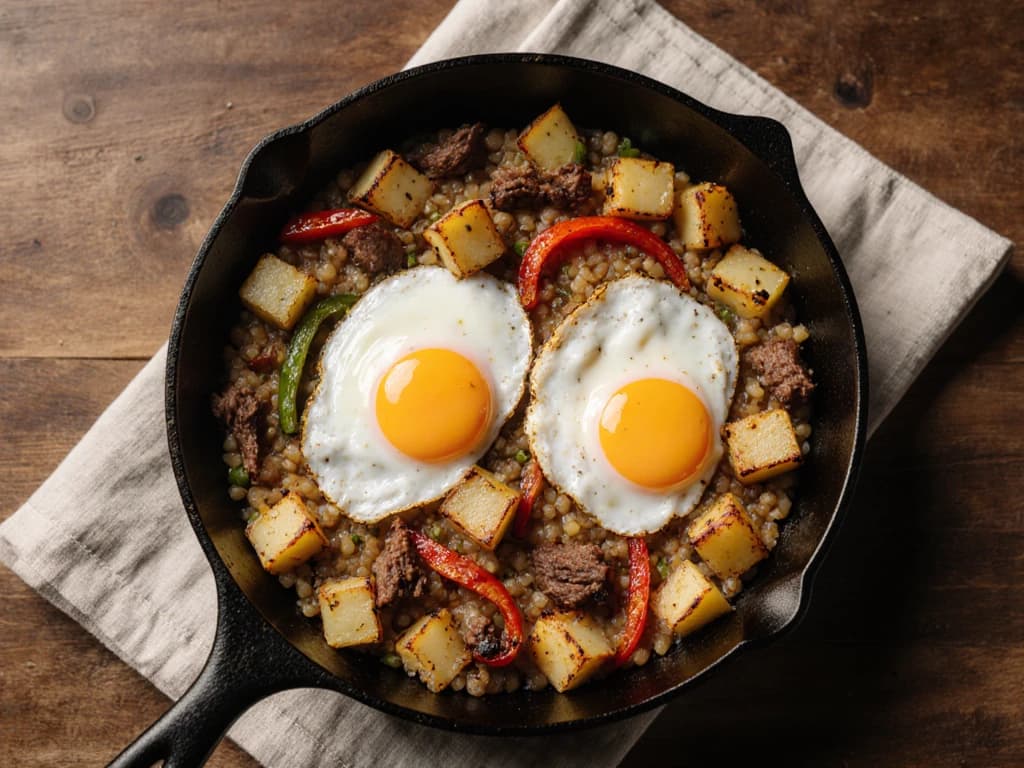
Smoked brisket breakfast hash is a single-skillet brunch that turns leftover brisket and a few pantry staples into something genuinely satisfying. Parboiled potatoes crisp faster and more evenly than raw ones, and the cast iron skillet develops a crust across the entire hash surface rather than just on the top layer. Four eggs nested into wells and steamed under the lid finish it off in 25 minutes total.
- 1
Parboiling potatoes for 5 minutes gelatinizes the exterior starch, creating a roughened surface that crisps faster in hot oil while the interior finishes cooking from residual heat without needing a cover
- 2
Pressing the hash flat with a wide spatula maximizes surface contact between all components and the hot skillet base, developing an even golden crust across the entire pan rather than just the top layer
- 3
Creating wells and covering the skillet traps steam that cooks egg whites from above while the yolks remain shielded from direct heat, producing set whites with fully liquid yolks in exactly 3 minutes
Smoked brisket breakfast hash turns leftover brisket into the most satisfying brunch dish a cast iron skillet can produce, with crispy potato cubes, roasted peppers, and smoky meat crisped together in a single pan before sunny-side eggs are nestled on top. Parboiling diced potatoes for 5 minutes before the skillet ensures a fully cooked interior without needing to cover the pan and steam away the crust. Pressing the hash flat with a spatula for the first 3 minutes of cooking develops an even golden crust across the entire potato-and-brisket surface.
Why Parboiling Changes Everything
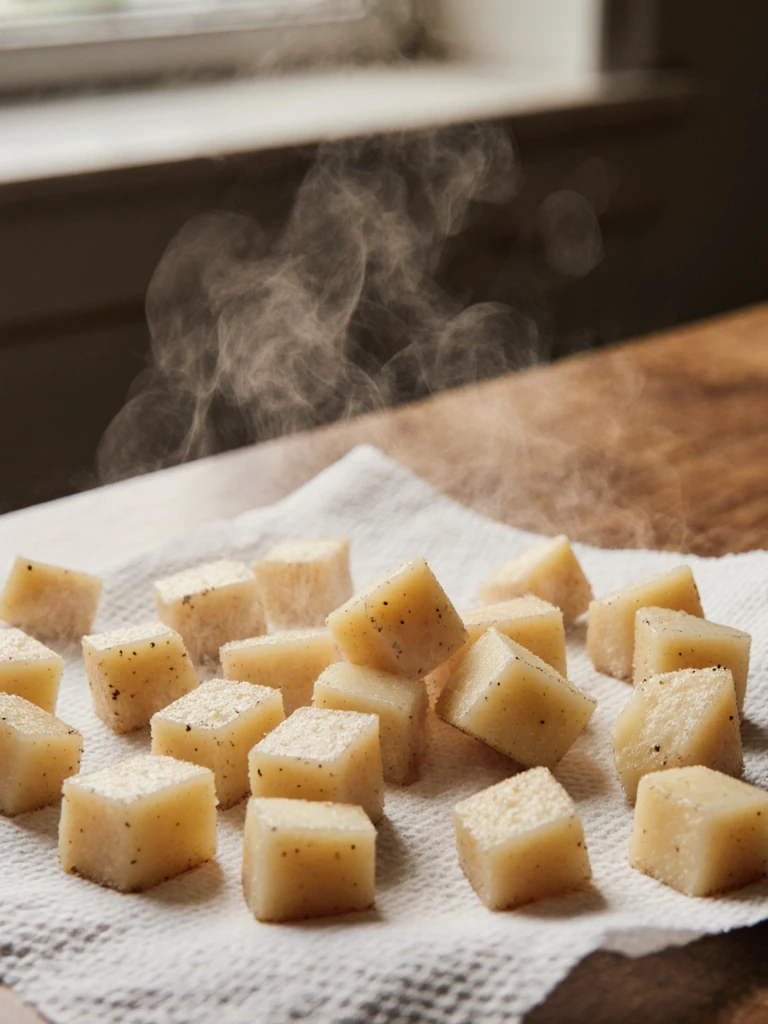
Raw diced potatoes placed directly in a skillet require either long cooking with a lid, which produces steam and soft skin rather than a crust, or very high heat that chars the outside before the interior cooks through. Parboiling for 5 minutes at a rolling boil partially gelatinizes the exterior starch of each cube, creating a slightly roughened surface that crisps faster and more evenly in the skillet. The parboiled potato contains enough residual heat to continue cooking from within, so the skillet contact time needed to reach a fully cooked interior drops by half compared to raw potatoes. Patting the parboiled cubes thoroughly dry with paper towels is the step that separates a hash with a golden crust from one that steams in its own moisture: surface water on each cube creates a steam pocket that must evaporate before browning can begin, adding 3 to 4 minutes to the crust formation time.
Building the Hash in Layers
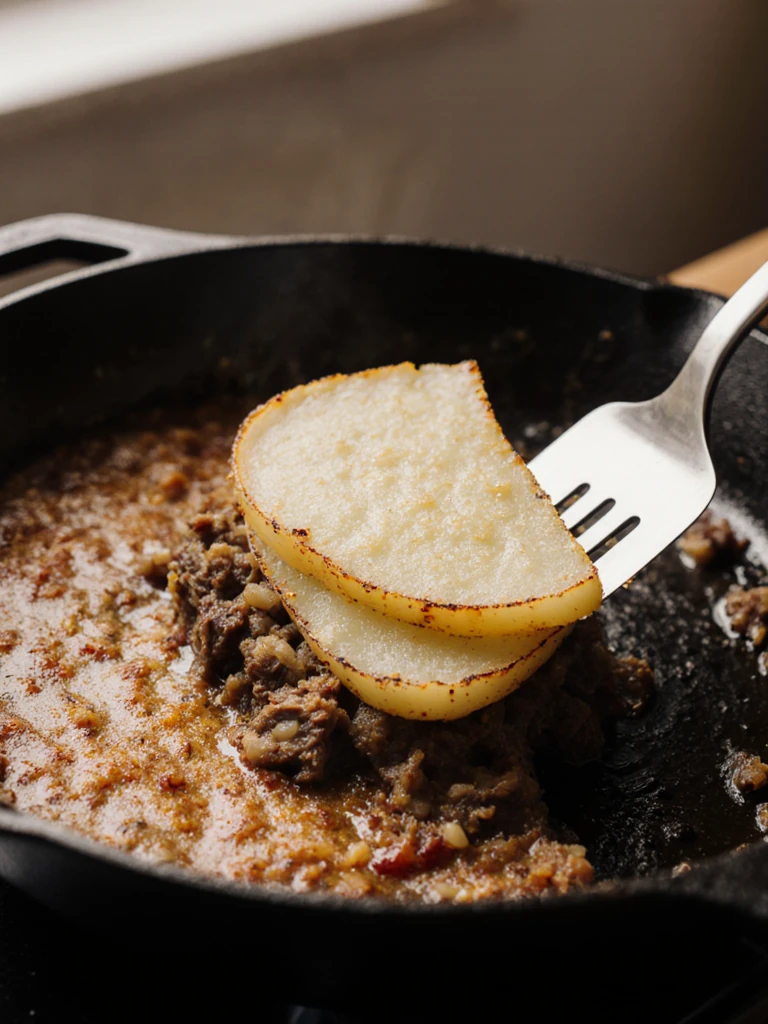
Hash construction happens in a specific sequence to ensure each component finishes cooking at the same time without any element overcooking before another is added. Potatoes go in first because they need the most contact time with the hot oil to develop their crust. Once the potato bottoms are golden, approximately 4 minutes in, the peppers and onions are added. Their moisture content reduces the skillet temperature slightly, slowing the potato crust development just as the potatoes reach the correct internal temperature of 88°C (190°F). Brisket goes in last, in the final 3 minutes, because the already-smoked meat only needs to warm through and develop caramelized edges rather than cook from raw. Pressing the hash flat with a wide spatula once all the components are in the skillet maximizes surface area contact with the pan base and produces a more even crust than simply stirring the ingredients.
Cooking the Eggs
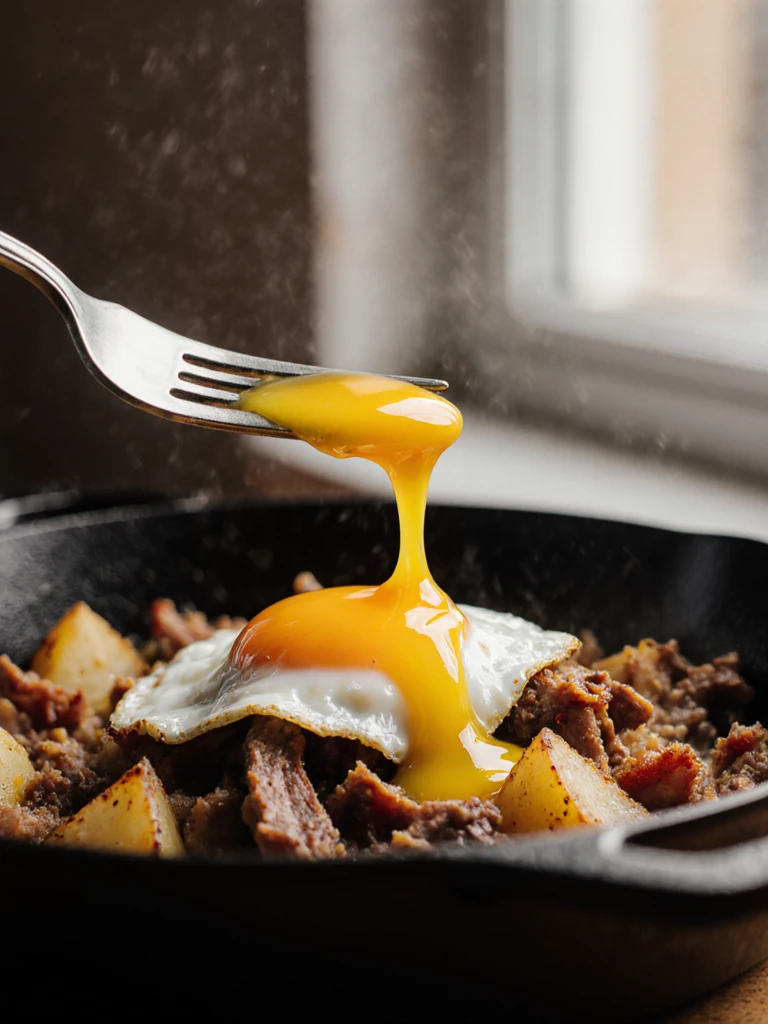
Sunny-side eggs cooked directly in the hash rather than separately in a second pan absorb the rendered brisket fat and smoky oil in the skillet, connecting the egg flavor directly to the meat below. Creating wells in the hash before cracking the eggs prevents the whites from spreading thinly across the entire skillet surface, which would cook the whites at the edges before the yolks set. Covering the skillet with a lid for 3 minutes traps steam and cooks the whites from above without direct heat touching the yolks, producing a set white with a yolk that remains fully liquid. Removing the lid at exactly 3 minutes and serving immediately prevents carryover heat from setting the yolk in the residual warmth of the cast iron.
The Recipe
Smoked Brisket Breakfast Hash
Ingredients
Instructions
- 1
Boil diced potatoes in salted water for 5 minutes, drain, and spread on paper towels. Pat thoroughly dry.
- 2
Heat oil in a large cast iron skillet over medium-high heat until shimmering. Add potatoes in a single layer, press flat with a wide spatula, and cook undisturbed for 4 minutes until the undersides are golden.
- 3
Add onion and bell peppers, season with smoked paprika, garlic powder, salt, and pepper, toss to combine, and cook for 4 minutes more.
- 4
Add brisket cubes and cook for 3 minutes, pressing the hash flat occasionally, until the brisket edges caramelize.
- 5
Use a spoon to create 4 wells in the hash. Crack an egg into each well, cover the skillet, and cook for 3–4 minutes until the whites are set and the yolks remain runny.
- 6
Remove the lid and garnish immediately with chives. Serve directly from the skillet.
Nutrition Facts
Per serving
420 Calories
Hearty & filling per serving
Macronutrients
* % Daily Value based on a 2,000 calorie diet
Tips & Notes
Dice the potatoes and brisket to the same 1.5 cm size so both finish crisping at the same time. Add more oil if the skillet looks dry after pressing the hash flat, since cast iron absorbs oil during the first few minutes. For scrambled eggs instead of sunny-side, beat 4 eggs with 1 tbsp water, pour over the hash after adding the brisket, and stir gently for 2 minutes until just set.
Frequently Asked Questions
Any waxy or all-purpose potato works. Yukon Gold holds its shape, crisps well, and has a buttery flavor. Avoid russets, which break apart more easily after parboiling.
Enjoyed this recipe?


