Smoked Brisket Burnt Ends
Smoked Brisket Burnt Ends
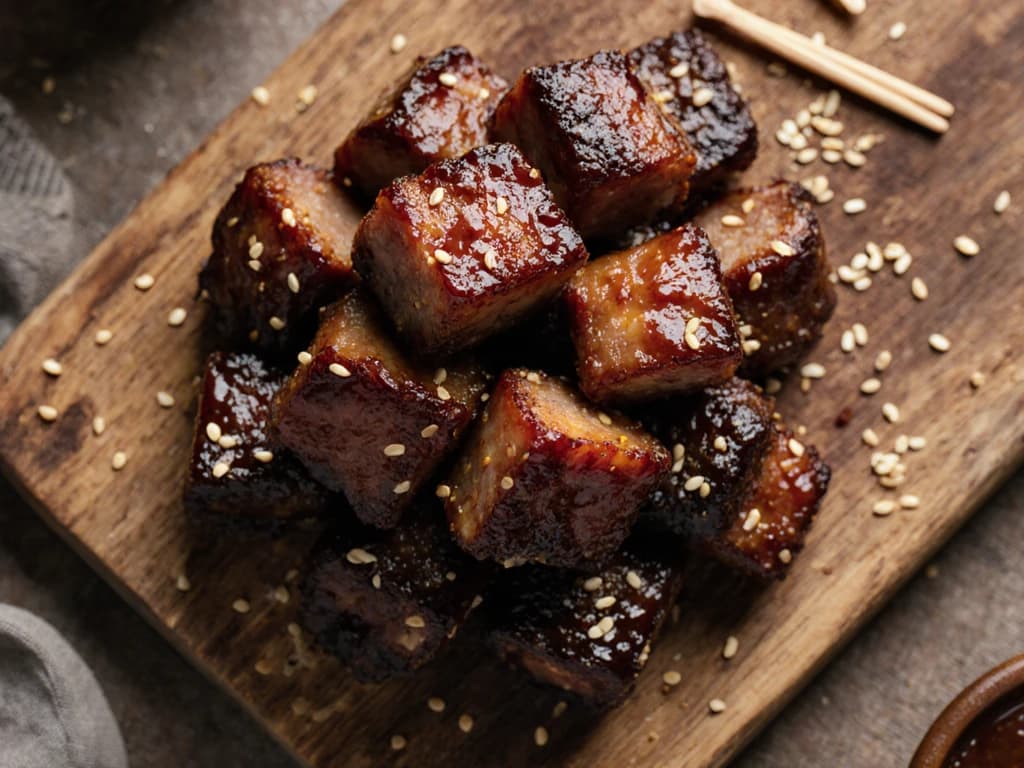
Smoked brisket burnt ends take the fatty, heavily marbled brisket point through a second smoke with a honey-and-BBQ glaze that caramelizes into a lacquered shell around a yielding, smoky interior. The two-stage process, pan first then grate, produces the contrast between crackling exterior and juicy core that makes burnt ends the most coveted item at any BBQ. Plan for 3 hours after the initial brisket cook.
- 1
The brisket point's 35% higher intramuscular fat content keeps cubes self-basting and moist through a second 2-hour smoke that would dry out leaner cuts
- 2
A 2:1 BBQ sauce to honey ratio lowers the effective burn point of the glaze while adding fructose caramelization from the honey, allowing the coating to set to a firm lacquer rather than burning or remaining permanently tacky
- 3
A two-stage process, pan at 135°C then grate at 150°C, first allows the glaze to penetrate all faces through the lower-temperature pan stage, then caramelizes the undersides through direct grate contact in the hotter final stage
Smoked brisket burnt ends are cubes of the brisket point returned to the smoker after the initial cook, coated in BBQ sauce and honey, and cooked uncovered until they develop a second, lacquered bark over the already-smoked meat. The point muscle contains roughly 35% more intramuscular fat than the flat, which makes the cubes self-basting during the second smoke rather than drying out. A 2:1 ratio of BBQ sauce to honey for the glaze ensures the coating caramelizes without burning when the smoker temperature rises to 150°C (300°F) for the final 45 minutes.
Why the Point Muscle Makes the Best Burnt Ends
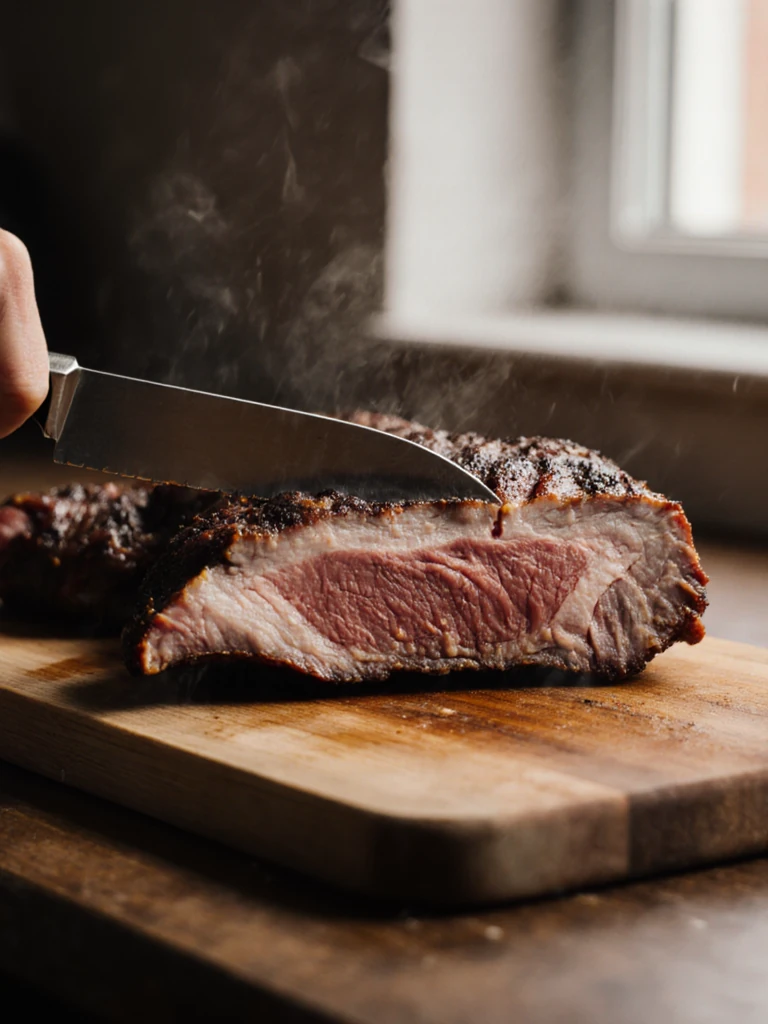
A packer brisket consists of two distinct muscles separated by a thick fat seam. The flat is the large, lean muscle that forms most of the brisket's length. The point, also called the deckle, sits on top of the flat and contains significantly more intramuscular marbling. The point's fat content means it can withstand a second 2-hour cook in the smoker without drying out, whereas the flat at the same exposure would lose too much moisture and become stringy. Separating the two muscles at the fat seam after the initial cook is straightforward with a boning knife: the fat layer between them is soft after 12 hours of smoking and the blade follows it naturally with minimal pressure. The flat is sliced for the main serving platter, and the point is cubed for burnt ends.
Getting the Glaze Ratio Right
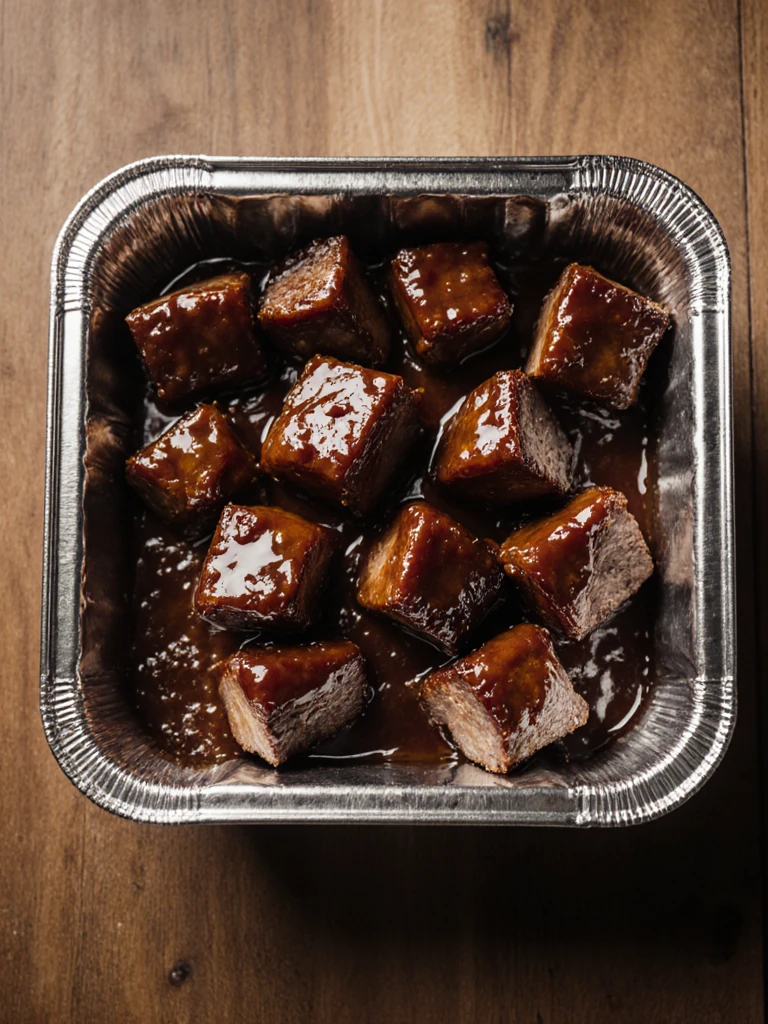
The glaze on burnt ends must accomplish two things simultaneously: contribute flavor and caramelize to a sticky lacquer without burning. Kansas City-style BBQ sauce contains tomato and molasses, which burn at approximately 177°C (350°F). Honey's sugars caramelize at a lower temperature but contribute additional fructose that helps the glaze set rather than remain tacky. The 2:1 ratio of BBQ sauce to honey balances these two properties, lowering the overall burn point of the sauce slightly while adding the fructose caramelization of the honey. Brown sugar adds a third layer of sweetness with a slightly bitter molasses note that reinforces the dark bark flavor. Butter cut into the sauce at the coating stage creates an emulsion that coats each cube evenly rather than pooling at the bottom of the pan.
The Two-Stage Smoke Process
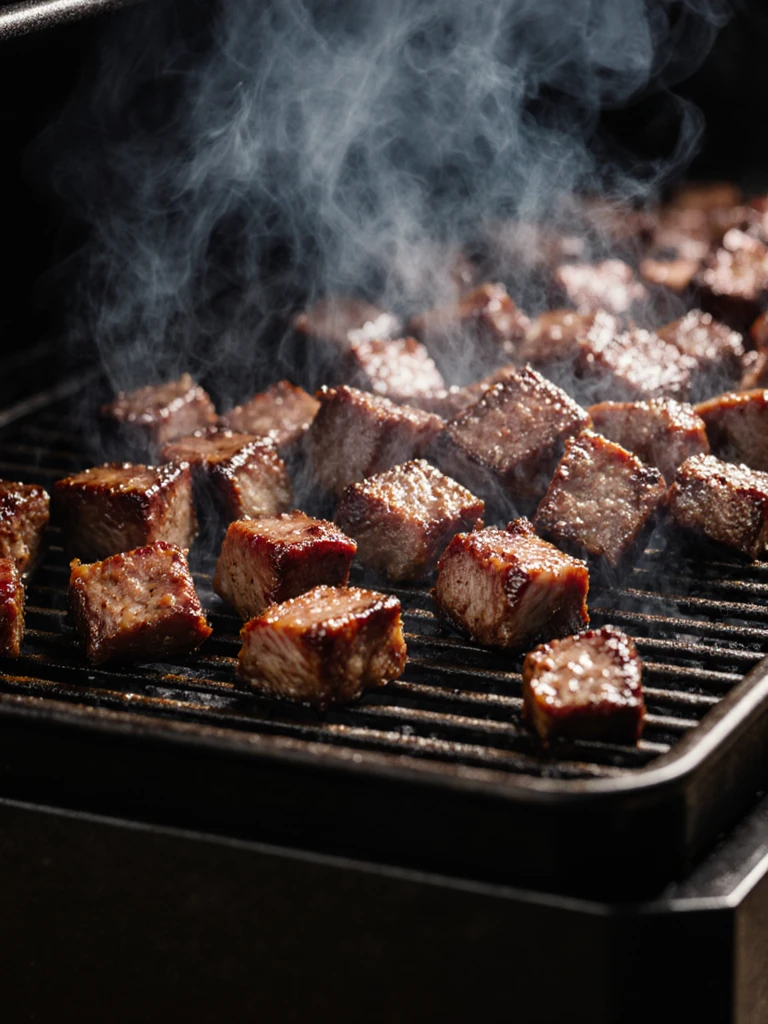
Stage one of the burnt ends process takes place in the aluminum pan at 135°C (275°F) for 90 minutes. The lower temperature allows the glaze to penetrate the cubes rather than sealing on the surface immediately. Stirring at the 45-minute mark redistributes the pooled sauce from the bottom of the pan and ensures each face of every cube has contact with the glaze. Stage two removes the pan and places the individual cubes directly on the smoker grate at 150°C (300°F) for 30 to 45 minutes. Grate contact caramelizes the underside of each cube while the higher temperature sets the glaze into a firm, crackable shell on the exposed faces. The transition between the two stages is the point where burnt ends go from merely good to exceptional, as the final 30 minutes on the grate produces a contrast between the crackling exterior and the yielding interior that the pan alone cannot achieve.
Testing for Doneness
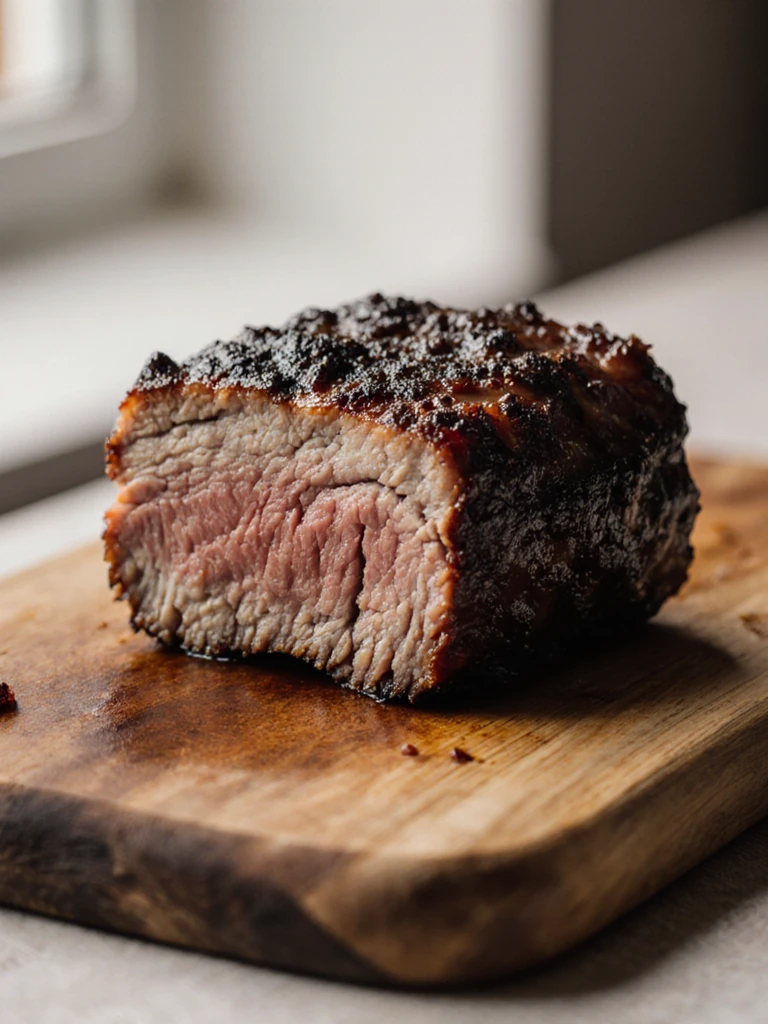
Burnt ends are done when the glaze on the top and sides has set to a dry, tacky surface that does not transfer to a finger pressed lightly against it. The internal temperature of the cubes at this stage will typically register between 88°C and 96°C (190°F and 205°F), but temperature is a less reliable indicator than the surface feel because the glaze insulates the probe and can give slightly lower readings than the true core temperature. Splitting a test cube with a finger or fork reveals the interior: properly finished burnt ends have a glistening, yielding core that pulls apart in short strands without falling completely apart. Cubes that hold a completely intact shape need 10 to 15 more minutes on the grate. Cubes that crumble entirely have gone 15 minutes too long.
The Recipe
Smoked Brisket Burnt Ends
Ingredients
Instructions
- 1
Separate the brisket point from the flat by running a boning knife along the fat seam between the two muscles.
- 2
Cut the point into 4 cm cubes and place in a single layer in a disposable aluminum pan.
- 3
Combine BBQ sauce, honey, butter, and brown sugar in a small saucepan over low heat and stir until the butter melts and the sauce is smooth.
- 4
Pour the glaze over the brisket cubes and toss to coat every surface evenly.
- 5
Place the pan uncovered in the smoker at 135°C (275°F) for 90 minutes, stirring the cubes at the 45-minute mark to redistribute the pooled sauce.
- 6
Remove the pan and transfer individual cubes directly to the smoker grate. Raise smoker temperature to 150°C (300°F) and cook for 30–45 minutes until the glaze is set and tacky.
- 7
Test doneness by splitting a cube: the interior should be glistening and yielding, pulling apart in short strands. Serve immediately on a wooden board with toothpicks.
Nutrition Facts
Per serving
380 Calories
Moderate energy per serving
Macronutrients
* % Daily Value based on a 2,000 calorie diet
Tips & Notes
Cut the point into uniform 4 cm cubes so all pieces spend the same time on the grate and finish at the same doneness. If the glaze looks wet and is not setting after 30 minutes on the grate, raise the smoker temperature to 165°C (325°F) for the final 15 minutes. Reserve any sauce remaining in the aluminum pan and brush it on the cubes after the grate stage as a final coating for extra glaze depth.
Frequently Asked Questions
The brisket point is the best cut for burnt ends because its high intramuscular fat content keeps the cubes moist through the second 2-hour smoke. The flat dries out too quickly at the same exposure.
Enjoyed this recipe?


