Smoked Brisket Mac and Cheese
Smoked Brisket Mac and Cheese
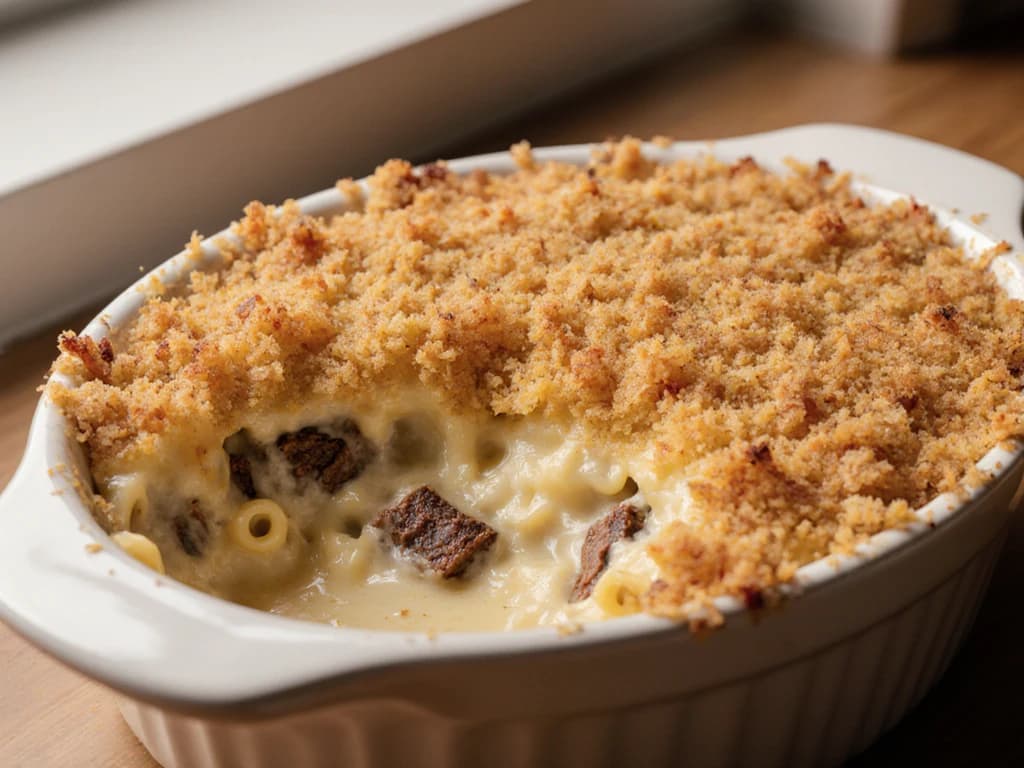
Smoked brisket mac and cheese combines a sharp cheddar and Gruyère bechamel with bark-edged brisket chunks, all baked under a smoked paprika panko crust. The cheese sauce stays smooth because the heat is controlled precisely during the melt, and the pasta is pulled under al dente so it finishes in the oven. The result is the most satisfying BBQ comfort food in one dish.
- 1
Removing the bechamel from heat before adding cheese keeps the sauce temperature below 82°C (180°F), preventing casein proteins from tightening and separating the fat from the sauce
- 2
Pulling pasta 2 minutes before al dente and folding it into warm sauce allows it to finish cooking in the oven while absorbing the cheese sauce, producing a fully sauced result rather than dry pasta pockets
- 3
Tossing panko in melted butter before baking coats each large, flat flake in fat that conducts heat evenly, producing a deep golden crust that stays crisp rather than compacting under its own weight
Smoked brisket mac and cheese layers a sharp cheddar and Gruyère bechamel with chunks of bark-edged brisket, then finishes under a panko breadcrumb crust that provides textural contrast to the creamy sauce below. Gruyère melts into the bechamel without breaking, while sharp cheddar contributes the tangy, aged note that distinguishes a real cheese sauce from a processed one. Mixing smoked paprika into the breadcrumb topping ties the crust visually and flavourfully to the brisket below, creating a unified dish rather than two separate components sitting in the same pan.
Building a Bechamel That Does Not Break
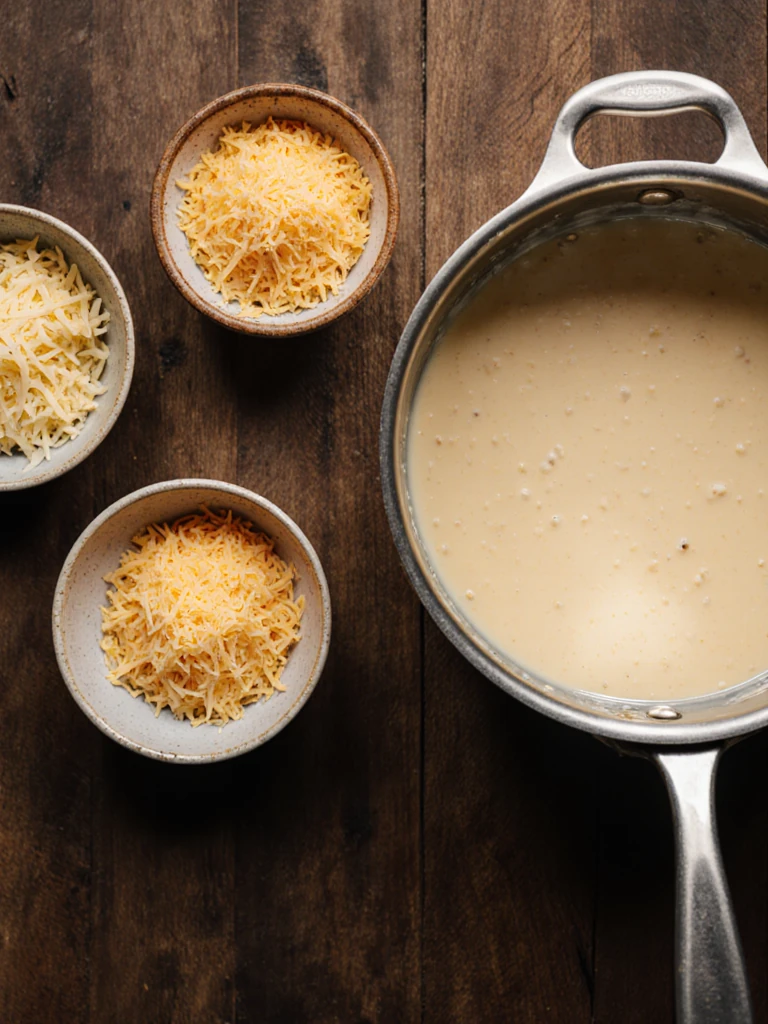
A cheese sauce breaks when the protein bonds in the melted cheese tighten and expel the fat, producing a greasy, grainy sauce rather than a smooth one. Two practices prevent breaking. First, removing the bechamel from the heat before adding the cheese means the sauce temperature drops from approximately 88°C (190°F) at a full simmer to around 74°C (165°F) when the cheese goes in, staying below the 82°C (180°F) threshold at which most cheddar proteins begin to tighten aggressively. Second, using Gruyère alongside the cheddar introduces a cheese with a naturally lower casein-to-fat ratio that melts smoothly and stabilizes the sauce even if the temperature edges up slightly during the bake. Grating both cheeses finely rather than in thick shreds reduces the time they spend melting, further limiting heat exposure.
Cooking the Pasta Correctly for Baked Mac
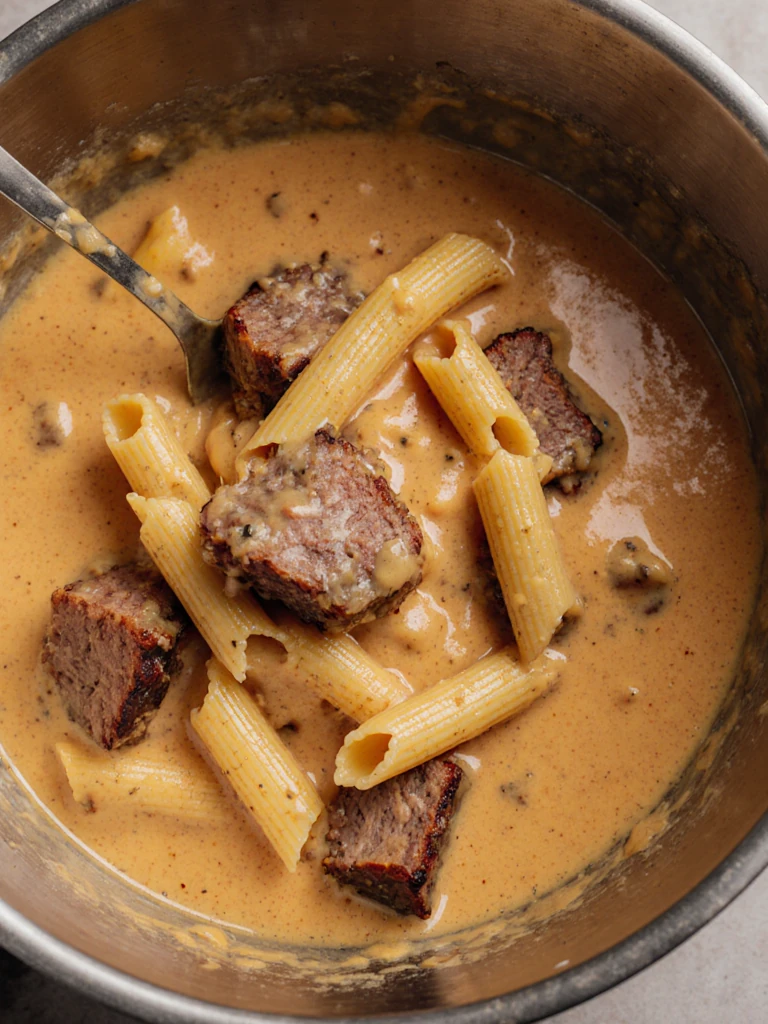
Pasta for a baked mac and cheese should be pulled from the boiling water 2 minutes before the package's al dente time, not at it. The pasta finishes cooking during the 20 to 25 minutes in the oven while absorbing sauce from around it. Pasta cooked to full al dente before baking becomes overcooked by the time the crust browns. Cavatappi, a double-spiral tubular shape, is the preferred shape over standard elbow macaroni because the inner spiral channels hold sauce on the inside of each piece as well as the outside, producing a more thoroughly sauced result in every forkful. The pasta should be folded into the cheese sauce while both are still warm, since cold pasta absorbs less sauce and produces drier pockets in the finished dish.
The Panko Crust
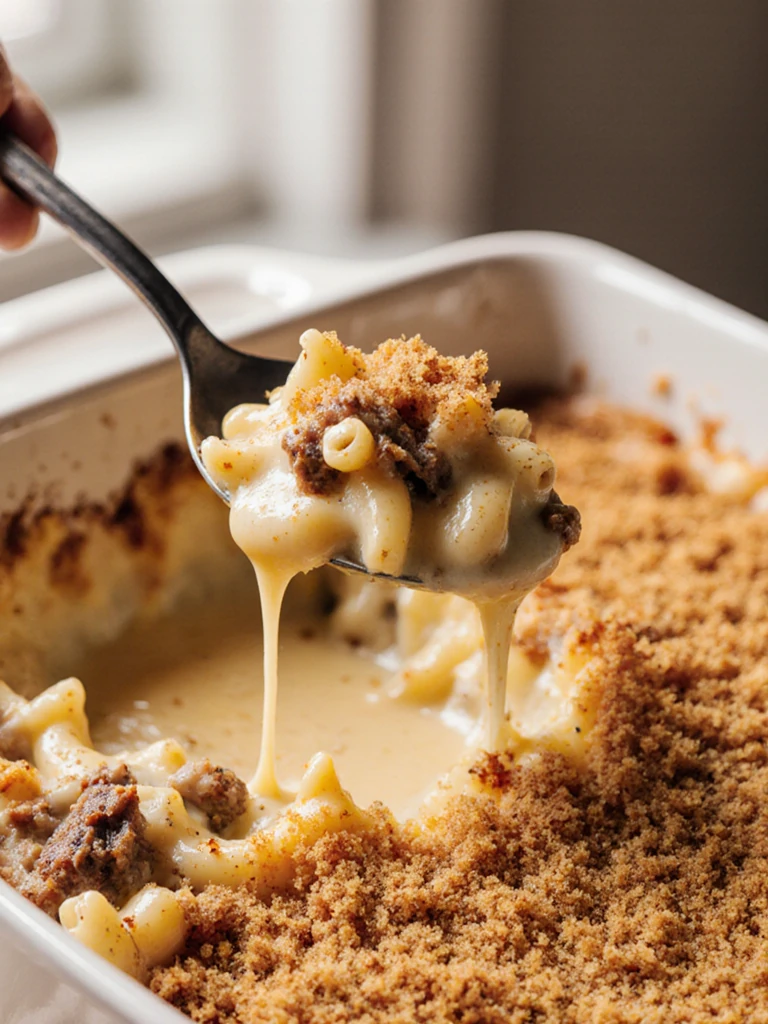
Standard breadcrumbs produce a dense, heavy crust that compacts under its own weight during baking. Panko breadcrumbs are made from crustless white bread processed into large, flat flakes that remain airy and open-textured even after 25 minutes at 190°C (375°F). Tossing the panko in melted butter before scattering over the mac and cheese coats each flake in fat, which conducts heat and promotes even browning rather than leaving some flakes pale and others scorched. Smoked paprika at 1 tsp per 80g panko colors the crust orange-red before baking, ensuring the final color matches the visual warmth of the brisket and cheese below.
The Recipe
Smoked Brisket Mac and Cheese
Ingredients
Instructions
- 1
Cook pasta in well-salted boiling water to 2 minutes before the package al dente time. Drain and set aside.
- 2
Melt 60g butter in a heavy saucepan over medium heat. Whisk in flour and cook the roux for 2 minutes, stirring constantly, until pale golden and smelling nutty.
- 3
Stream in warm milk gradually, whisking constantly. Cook over medium heat for 5 minutes, stirring frequently, until the sauce coats the back of a spoon.
- 4
Remove from heat. Stir in both cheeses, Dijon mustard, and garlic powder until the cheese melts completely. Season with salt and white pepper.
- 5
Fold brisket and pasta into the cheese sauce while still warm. Transfer to a greased 23x33 cm baking dish.
- 6
Toss panko, smoked paprika, and melted butter together until evenly coated. Scatter evenly over the pasta surface.
- 7
Bake at 190°C (375°F) for 20–25 minutes until the crust is deep golden and the sauce bubbles at the edges. Rest 5 minutes before serving.
Nutrition Facts
Per serving
680 Calories
Hearty & filling per serving
Macronutrients
* % Daily Value based on a 2,000 calorie diet
Tips & Notes
Always use block cheese and grate it yourself; pre-shredded cheese contains potato starch and cellulose anti-caking agents that prevent smooth melting and produce a grainy sauce. Keep the milk warm in a separate saucepan when making the bechamel; cold milk added to the roux drops the temperature and creates lumps that must be whisked out. Assemble the dish up to 24 hours ahead and refrigerate covered; add 5 to 10 minutes to the bake time when starting from cold.
Frequently Asked Questions
Gruyère melts smoothly and stabilizes the sauce while sharp cheddar provides flavor. Fontina is a good substitute for Gruyère. Avoid pre-shredded cheese, which contains anti-caking agents that prevent smooth melting.
Enjoyed this recipe?


