Smoked Brisket Ramen
Smoked Brisket Ramen
Smoked brisket ramen pairs slices of oak-smoked beef with a 20-minute aromatic broth, jammy marinated eggs, and chewy noodles. The recipe turns 12 ounces of leftover barbecue into four restaurant-style bowls in about 45 minutes.

- 1
Off-heat warming preserves tenderness: brisket slices heat through in 60 to 90 seconds below a simmer instead of toughening in boiling broth
- 2
A separate soy and mirin tare seasons each bowl precisely, so the broth never over-salts as it reduces during the 20-minute simmer
- 3
Dried shiitake mushrooms add glutamate depth that stands up to oak smoke, keeping the beef and the broth in balance
Smoked brisket ramen pairs slices of oak-smoked beef with an aromatic Japanese noodle broth, and the bowl comes together in about 45 minutes once the brisket is cooked. The pairing traces back to barbecue-ramen mash-ups in Austin, where pitmasters found that heavy beef smoke and a glutamate-rich broth reinforce each other rather than compete. A 20-minute stock infusion, a measured spoonful of seasoning, and a 90-second warm-through for the meat produce four restaurant-style bowls from 12 ounces of leftovers.
What Makes Smoked Brisket Ramen Work
Smoked brisket ramen works because shiitake-boosted beef stock matches the intensity of oak smoke, while a separate seasoning base keeps each bowl balanced instead of over-salted.
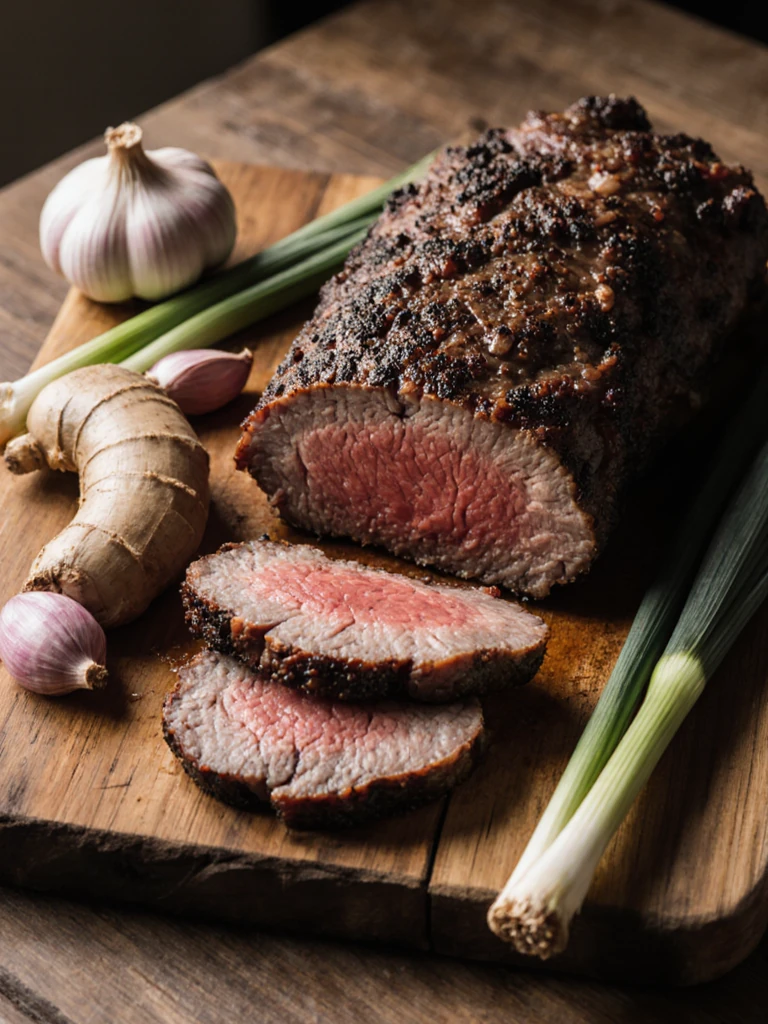
Brisket carries two assertive elements into the bowl: smoke and rendered fat. Plain chicken stock collapses under both, which is why the broth here starts with low-sodium beef stock and two dried shiitake mushrooms. Shiitakes contribute guanylate, a compound that amplifies the savory glutamates already present in beef, so the broth tastes concentrated without a long reduction. Cooks starting from scratch can smoke the meat a day ahead; a Texas-style brisket seasoned with only salt and coarse pepper carries the cleanest smoke into the broth, since sweet or paprika-heavy rubs clash with soy and mirin.
Building the Broth and the Tare
Simmer beef stock with ginger, garlic, shiitakes, and scallion whites for 20 minutes, then season each bowl with 2 tablespoons of tare instead of salting the pot.
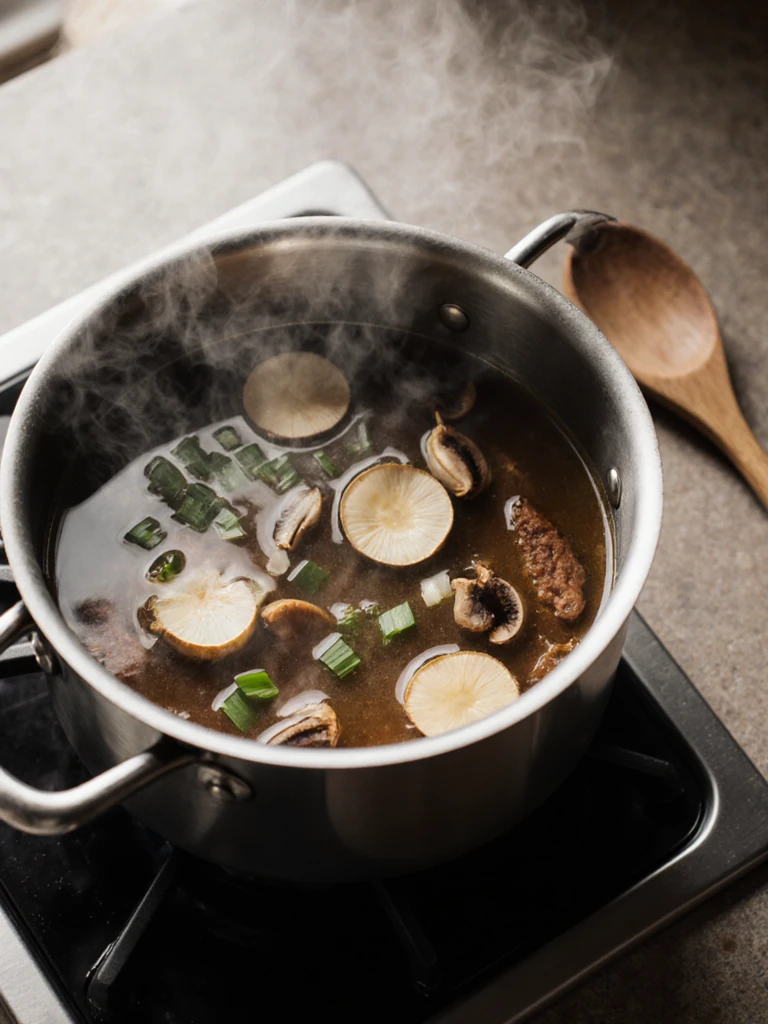
Tare is the concentrated seasoning base that ramen cooks spoon into the bowl before the broth goes in. Mixing soy sauce, mirin, rice vinegar, sesame oil, and brown sugar takes 2 minutes and solves a real problem: a pot of broth loses 10 to 15 percent of its volume over a 20-minute simmer, so salt added early concentrates past the point of correction. Seasoning in the bowl keeps every serving adjustable. Mirin, a sweet Japanese rice wine, rounds out the soy, and the rice vinegar cuts the richness of the brisket fat and brightens the finished broth.
Warming Brisket Without Drying It Out
Warm the sliced brisket in broth held just below a simmer for 60 to 90 seconds; a rolling boil squeezes moisture out of the muscle fibers and turns tender slices chewy.
The collagen in brisket already converted to gelatin during the original cook, when the meat climbed to 203°F over many hours in the smoker. Reheating has one job: bring the slices to a serving temperature near 140°F without re-tightening the proteins, and 60 to 90 seconds in hot broth accomplishes that. Slices from the fattier point survive the warm-through better than the lean flat, the same property that makes point meat the anchor of a slow pot of brisket chili. Flat slices belong at the short end of the window. A common failure: dropping brisket into furiously boiling broth for 5 minutes, which produces gray, stringy meat no garnish can rescue.
Marinated Eggs and Toppings
Boil large eggs for 6½ minutes, shock them in ice water, then marinate the peeled eggs in equal parts soy sauce and water for at least 4 hours.
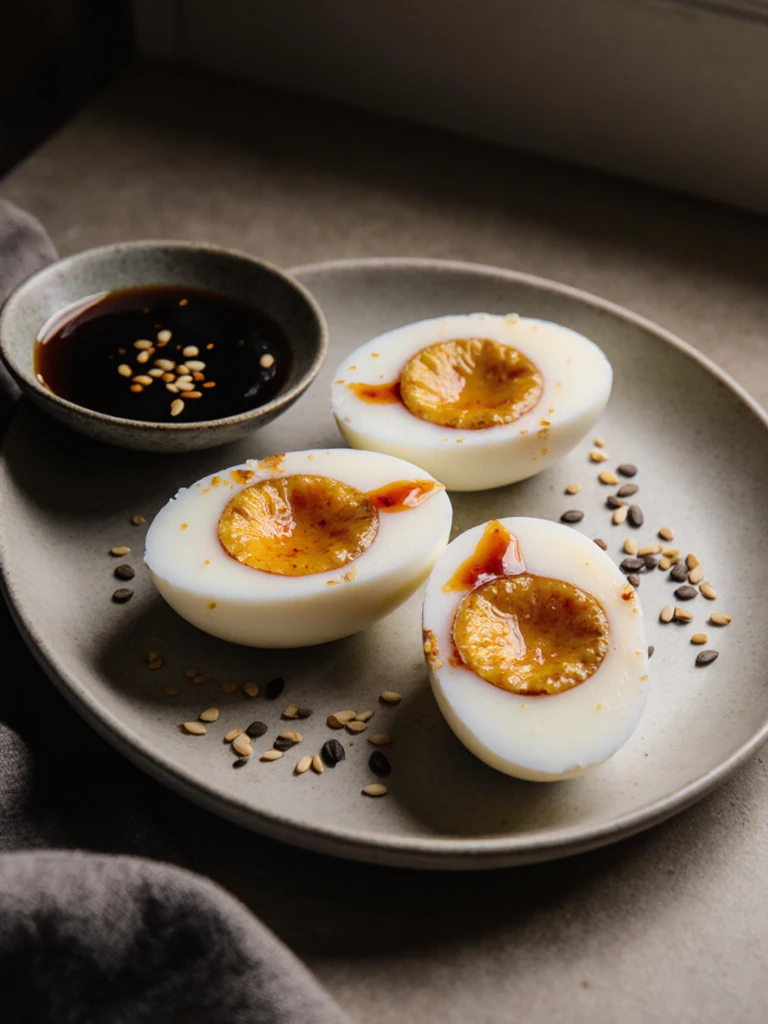
Ajitsuke tamago is the Japanese term for a soft-boiled egg seasoned in a soy-based marinade. The 6½-minute boil sets the white while leaving the yolk thick and jammy; one extra minute firms the center entirely. Marinating works between 4 and 12 hours, and past that point the whites turn rubbery and over-salted. The remaining toppings bridge the two cuisines: sliced jalapeño and scallion greens appear on both barbecue trays and ramen counters, and toasted sesame seeds echo the sesame oil in the tare.
Noodles and Bowl Order
Cook the noodles in a separate pot of unsalted boiling water for 2 to 3 minutes, then build each bowl in a fixed order: tare first, noodles second, broth third, toppings last.
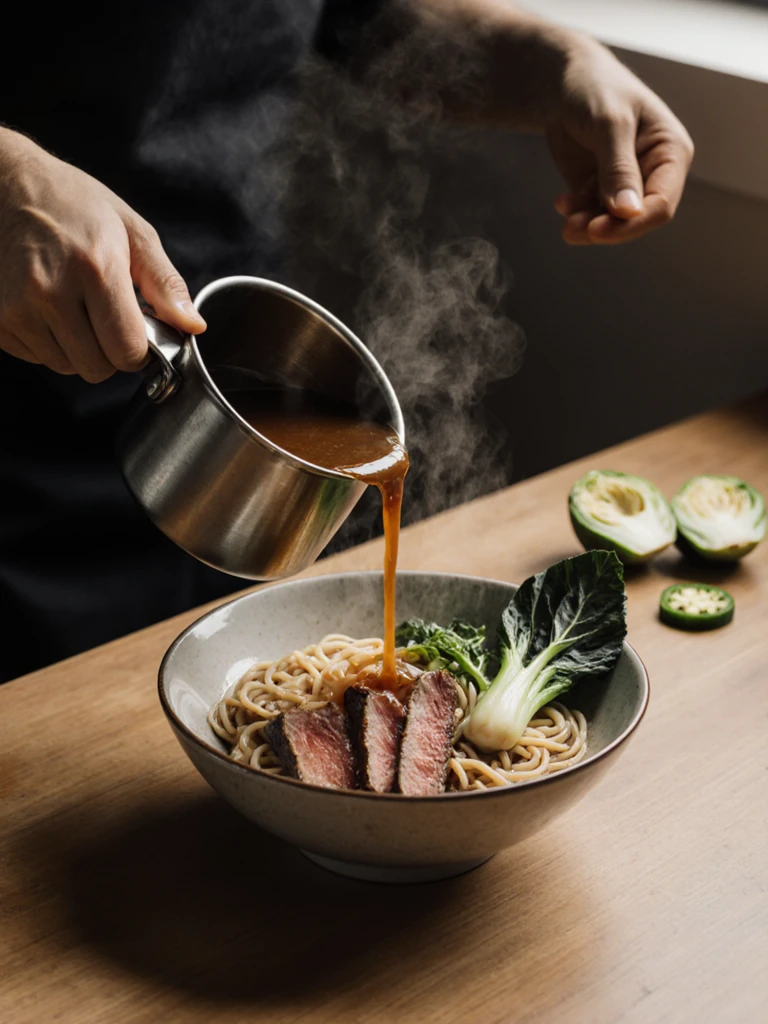
Cooking noodles directly in the serving broth clouds the liquid with starch and soaks up a disproportionate share of the seasoning, which is why ramen shops boil noodles separately. Fresh ramen noodles cook in 2 to 3 minutes; dried instant noodles work in the same window once the seasoning packet goes in the trash. The tare-first bowl build matters because the hot broth disperses the seasoning evenly the moment the ladle hits the bowl, and noodles dropped on top of the tare lift it through the whole serving.
Twelve ounces of leftover barbecue, one pot, and 45 minutes deliver a dinner that earns a spot in the regular rotation. Print the recipe card below and put the last of the weekend brisket to work tonight.
The Recipe
Smoked Brisket Ramen
Ingredients
For the broth
For the tare
For the bowls
Instructions
- 1
Lower the eggs into a pot of boiling water and cook for 6½ minutes
- 2
Transfer the eggs to ice water, then peel once cool
- 3
Submerge the peeled eggs in the soy and water mixture and marinate in the fridge for at least 4 hours
- 4
Combine the beef stock, ginger, garlic, shiitake mushrooms, and green onion whites in a large pot
- 5
Simmer the broth uncovered over medium-low heat for 20 minutes
- 6
Stir together the soy sauce, mirin, rice vinegar, sesame oil, and brown sugar to make the tare
- 7
Strain the aromatics out of the broth and return the liquid to the pot
- 8
Boil the bok choy in the broth for 2 to 3 minutes, then lift the halves into the serving bowls
- 9
Cook the ramen noodles in a separate pot of unsalted boiling water for 2 to 3 minutes, then drain
- 10
Reduce the broth to just below a simmer and warm the brisket slices in the pot for 60 to 90 seconds
- 11
Spoon 2 tablespoons of tare into each serving bowl and add the drained noodles
- 12
Ladle the hot broth over the noodles and top with brisket, halved eggs, jalapeño, sesame seeds, and green onion tops
Nutrition Facts
Per serving
670 Calories
Hearty & filling per serving
Macronutrients
* % Daily Value based on a 2,000 calorie diet
Tips & Notes
Salt in two stages: taste the finished bowl before adding extra tare, since brisket bark already carries a heavy salt load. Make the broth and tare up to 3 days ahead; store them separately so each bowl stays adjustable. No mirin on hand? Substitute 2 tablespoons of dry sherry plus ½ teaspoon of sugar for a close match. Slices falling apart? Chill the brisket fully before slicing; cold brisket cuts into clean ¼-inch slices that hold together in hot broth.
Frequently Asked Questions
Yes. Sliced leftover smoked brisket works best; warm it in hot broth held below a simmer for 60 to 90 seconds so the slices heat through without drying out.
Enjoyed this recipe?


